

Optimal Heater Placement For Your Marine Aquarium
Welcome to Simple Reefs. We are a brand new website designed to take the stress and expense out of starting your very own marine aquarium. We have been talking about aquarium heaters a lot, as of late. It might seem obvious, but I think it can really help to have a guide on Optimal Heater Placement For Your Marine Aquarium.
Table of Contents
Optimal Heater Placement
Marine Aquarium heaters are often overlooked. After all, they aren’t particularly interesting and the novelty pales in comparison to fancy lights and livestock. With that being said, maintaining a stable and consistent water temperature is incredibly important for the health of your marine aquarium. This is even more pertinent when it comes to complex reefs with delicate coral. We talk all about it in our article on The Importance of Marine Aquarium Heaters.
Fluctuations of temperature can stress corals, fish, and invertebrates, causing something known as thermal shock and making them more susceptible to disease and hindering their growth. In the worst case scenario, it can even lead to coral bleaching and death.
While an accurate heater is essential, its placement within your specific aquarium setup is equally crucial for efficient heat distribution and the safety of your aquatic inhabitants. We don’t want any cold spots, we don’t want overly warm water, and we definitely don’t want any burns.
The ideal location of your aquarium heater will highly be determined by your tank configuration. Let’s discuss the optimal practices for tanks with a sump, those without a sump, and the ever-popular all-in-one (AIO) systems.
Tanks with a Sump: Finding The Perfect Heating Zone
For saltwater tanks that feature a sump (meaning they have a secondary reservoir typically located below the display tank) the sump is an ideal location for your heaters. It’s out of the sight, none of your fish can burn themselves on it, and all of the water in your system will be exposed to the heater for some length of time.
Ideal Location: You might be wondering which chamber you should be putting your heater in. Well, the best location for aquarium heaters in your sump is typically in the centre section. This is the section that should contain your protein skimmer and reactors. Some may also refer to this as the constant water level chamber. Let’s explain why the heater being here makes the most sense. One of these reasons is absolutely crucial so read carefully.
Why it Works:
- Even Heat Distribution: Placement of the heater here means that all of the water entering the sump is heated evenly, which aids in a consistent temperature throughout the entire system. If you have a protein skimmer in this chamber, your skimmer will help mix this water up, as well.
- Aesthetics: Heaters are unsightly. The sump keeps them completely out of view, making the main display look clean and uncluttered. The centre chamber is, usually, the largest so big enough to accommodate even large heaters neatly out of sight.
- Safety & Accessibility: It is more accessible for adjustment, cleaning, or replacement without disrupting the occupants or aquascape of the display tank. It also significantly reduces the risk of fish or invertebrates getting burned by direct contact.
- Stable Water Level: This is the absolute most crucial reason why we leave the heater in the centre chamber. This section of the sump generally features a consistent water level, which keeps the heater fully submerged and safely running. imagine a scenario where your ATO was to fail and your return section ran dry. Your heater, if placed in the return section, would quickly burn out and could cause massive damage. Keep your heater in the one part of your sump that will always have a consistent water level.
- Multiple Heaters: For larger sumps or high-flow systems, two smaller heaters in the centre chamber are generally better than one large heater. This provides redundancy in the event of failure and can lead to more efficient heating. Place one heater at each end of your centre chamber.
- Heater Guards: If you have any livestock in your sump, a heater guard (a protective cage) is a worthwhile investment. you don’t want any inquisitive critters burning their legs, fins, or snouts on the warm heater.
What About External Thermostats and Heaters With Probes:
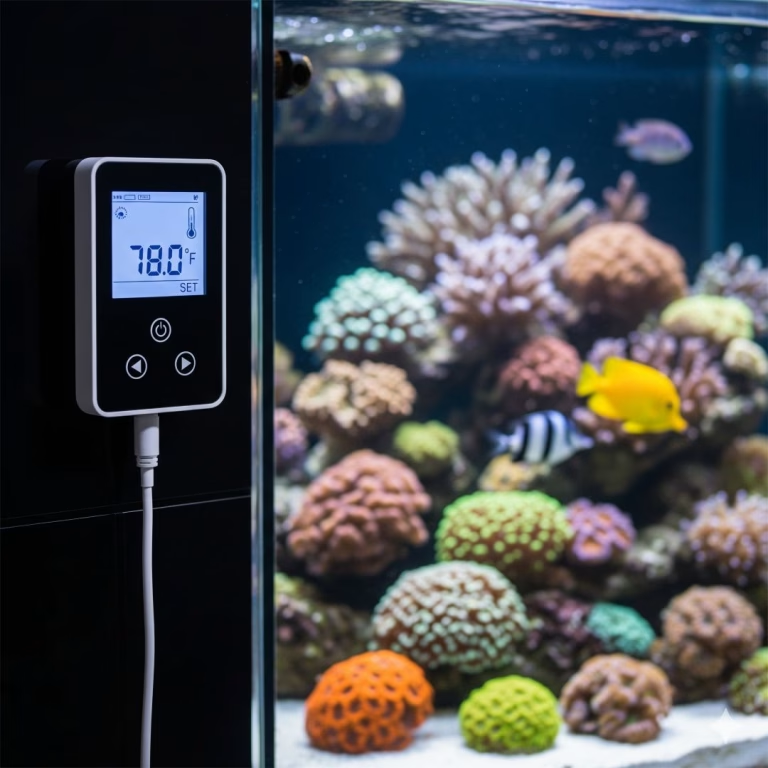
So what about if you are using an external heater controller with a probe? Well, the best place to put the probe is somewhere away from your heater. If you place the probe near your heater, it will only be reading the temperature of the water that is currently being heated, not the water coming from your actual display.
You want the probe to be sensing the temperature of the water before it gets to your heater. Placing the probe in your display or in the part of your sump where the water first enters from the display is ideal. That way, the heater itself won’t be interfering with the temperature.
Tanks Without a Sump (Display Tank Only): Balancing Function With Form
For display-only saltwater aquariums without an external sump, heater placement becomes a balance between effective heating and cosmetic discretion. Let’s be honest, a large heater in your display might stand out like a Blue Tang in a Red Sea Max Nano so we want to hide it while keeping it functional.
Ideal Placement: Heaters in display-only tanks are ideally placed in an area with good water flow. I always placed mine under a filter or next to a wavemaker. Some, more advanced, heaters will even complain if there isn’t enough flow over them. Behind tall rockwork will hide them, as long as there is sufficient water movement around the heater.
Some people choose to keep their heater horizontal or place it on a diagonal angle. This is totally down to preference but the logic is sound. When placed horizontally, the heater covers more of the tank’s width so should spread the heat more evenly. It is easier to hide a heater completely behind rock work like this, as well.
Why it Works:
- Heat Dispersion: Placing the heater in a location where water naturally circulates (e.g. near the output of a powerhead or filter) spreads the heated water all around the tank, preventing localised hot spots and enabling the entire tank to reach the desired temperature.
- Concealment (Optional): Tucking the heater behind rocks improves the aesthetics of the tank. Never compromise on flow for concealment; the heater needs water flowing over it in order to operate efficiently and safely so that is the priority but if you can hide it, that is a nice perk.
Considerations:
- Visibility: As opposed to in a sump, the heater will be in view. Choose a heater that is slim and consider its visual impact. Some are more discreet than others.
- Water Flow is Paramount: Insufficient flow past the heater can make it overheat or heat the water inefficiently. Don’t tuck it far back in dense rockwork where water barely flows. Consider placing the flow of a wavemaker over the heater if you want to hide it away.
- Distance from Sand Bed: Avoid placing the heater on, or directly above, the sand bed. The localised heat can burn burrowing animals and sand accumulation may even completely bury the heater which would be a huge safety risk.
- Heater Guards: These are even more crucial in display tanks. Fish, curious invertebrates, or even corals can accidentally touch an unguarded heater and get severe burns. Invest in a plastic guard. Some may even be able to prevent glass escaping a glass heater in case of failure.
- Redundancy for Larger Tanks: For display tanks over 50 gallons, consider using two smaller heaters placed on opposite sides of the tank (but still in good flow areas). This not only aids in even heating but also provides a crucial backup if one unit malfunctions. You don’t want your fish freezing in the worst case scenario.
All-In-One (AIO) Tanks: Making Use of The Rear Chambers
All-In-One (AIO) tanks are characterised by having filtration chambers integrated into the tank itself, often in the rear of the aquarium. These chambers almost act as, basically, a compact, internal sump. AIO tanks are incredibly popular and for good reason. They are an affordable way to get the best of both worlds. A neat and tidy display without all the pipework and extra space needed for a sump.
Best Location: The ideal location for heaters in AIO tanks is in one of the rear filtration chambers, obviously. This is going to vary based on your actual tank, however. My suggestion would be to place the heater horizontally in the centre chamber if that is possible. If it is not and your chambers are quite narrow, I would suggest placing the heater into the chamber that the water initially flows into or into the centre chamber. These chambers should have the most consistent water level.
You really want to avoid placing the heater into the return chamber with your return pump. This chamber is the one that is most likely to run dry if you are lax with topping up evaporation or if your ATO (Auto Top Off) fails. When it runs dry, the heater can burn out and cause all kinds of damage to your equipment and tank which likely won’t be covered under warranty.
Why it Works:
- Concealment: Similar to a sump, the rear chambers conceal the heater from the main display, preserving the aquascape’s clean aesthetics and beauty.
- Dedicated Flow: These chambers are designed for water flow, so all of the tanks water will pass over the heater efficiently before returning it to the display.
- Safety: Having the heater in a concealed compartment minimises direct contact with other occupants in the display so no nasty burns.
We do have a few things to consider including:
- Confined Space: AIO chambers can be narrow, particularly on AIO Peninsula style aquariums that have the chambers on the side. You may need a thinner or shorter heater to fit comfortably without impeding flow or equipment.
- Water Level: Make sure the heater is fully submerged at all times. Water levels in AIO chambers can fluctuate, especially with evaporation. Top-offs on a regular basis are required and keep your heater in the most consistent chamber wherever possible.
- Heat Buildup: With very small, compact AIO chambers, there is a risk of localised heat buildup that may stress the heater or nearby equipment. Monitor temperature closely, especially in the chamber itself, and ensure adequate flow.
- Heater Guards (Still Recommended): Although less exposed to display inhabitants, some AIO tanks have bigger openings or powerful flow that could still bring curious fish into contact. A guard is still a good idea. A guard can help with glass escaping from glass heaters if they fail, as well.
A Few Handy Heater Tips
There’s some things that you are going to want to keep in mind regardless of your setup. Here’s a list of handy tips to help you make sure that your aquarium is staying warm, but not too warm, and safe for all of your delicate fish, invertebrates, and coral.
- Always Use an Independent Thermometer: Never rely solely on the internal thermostat of the heater. Use an accurate, independent thermometer (digital or glass) at the opposite end of the tank from the heater to verify the actual water temperature. If you have a sump, keep the thermometer or probe in your actual display.
- Redundancy: For tanks over 50 gallons, it is highly recommended to employ two smaller heaters instead of one large one. If one fails (on or off), the other can avert a catastrophic temperature change.
- Accuracy Check: Periodically check your heater’s accuracy against a reliable independent thermometer. Some heaters do allow you to calibrate them. If you can’t calibrate them, perhaps consider replacing the heater if there is a drastic difference.
- Heater Guards: They’re cheap insurance costing only a few pounds each. Protect your valuable livestock from potential burns.
- Power Outages: If your heater is in a sump or AIO chamber that is prone to significant water level drops during a power outage, consider a heater with an auto-shutoff feature when out of water, or place it lower to mitigate this risk. If you can put the heater horizontally in your back chambers, do that for safety.
- Regular Cleaning: Algae and mineral buildup on the heater’s glass can reduce its efficiency. Coralline algae can be a particular culprit of this. Unplug and gently clean your heater regularly during tank maintenance.
In Short
Tailoring your heater’s placement to the specific quirks of your tank is key to keeping your water temperature stable. Following the tips we have outlined here, you should be able to find the perfect spot in your marine aquarium to keep your heater working efficiently and safely. Thanks for reading and spending your time at Simple Reefs.