
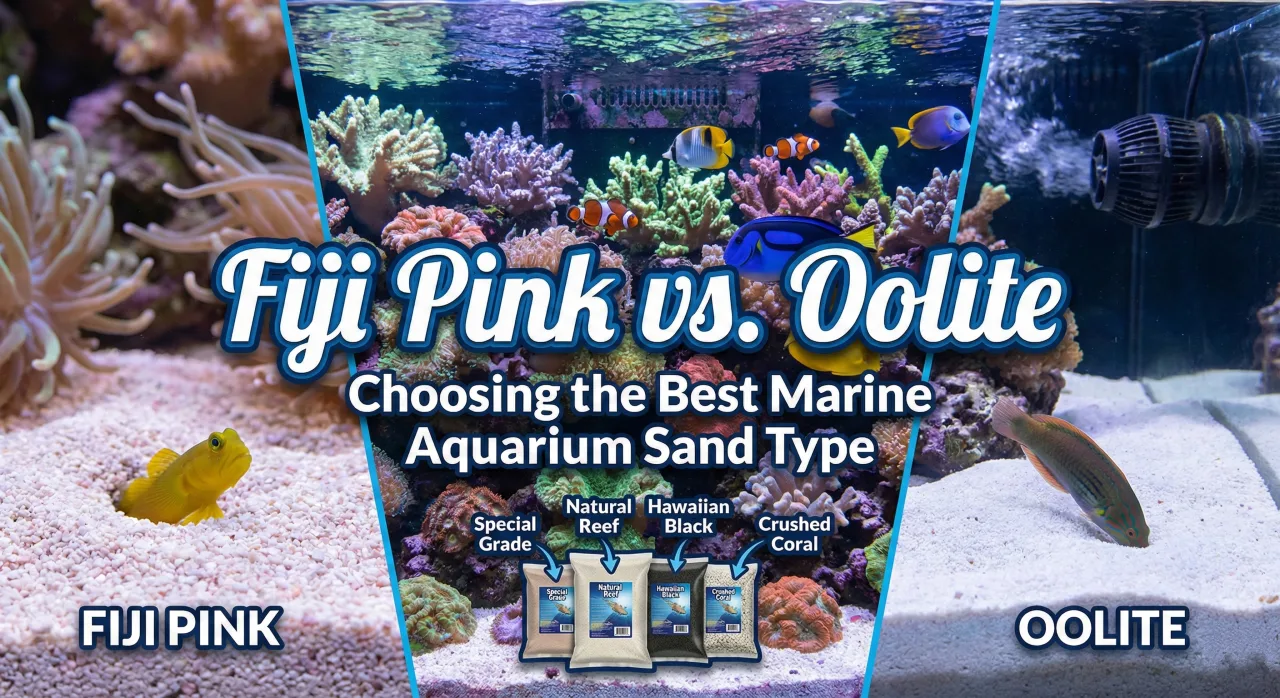
Fiji Pink vs. Oolite: Choosing the Best Marine Aquarium Sand Type
Welcome back to Simple Reefs. Today we are taking a closer look at just which marine aquarium sand is best depending on your desired reef setup and, of course, your budget. Let’s take a look at Fiji Pink vs. Oolite: Choosing the Best Marine Aquarium Sand Type.
Table of Contents
The Great Grain Debate: In this guide, we are going to break down exactly what makes marine aquarium sand so special. We will look at the most popular types, their unique colours, and most importantly, how their grain sizes will affect the water flow and the fish in your tank.
Key Takeaways
- Aragonite is Key: Marine sand is not just for decoration. Aragonite sand actually dissolves slowly over time, leeching calcium into the water to naturally stabilise your tank’s pH.
- Flow Dictates Sand: If you want high-flow wavemakers for demanding corals, you must choose a heavier, larger grain sand (like Special Grade) to avoid a permanent sandstorm.
- Livestock Dictates Sand: Burrowing wrasses and sand-sifting starfish require soft, fine sand (like Oolite or Fiji Pink) to prevent injury to their bellies.
You Want a Sand Bed?
If you are setting up a new marine aquarium, you have probably already made the big decision to include a sand bed. We talked all about the difference between sand beds and bare bottom tanks in this article here.
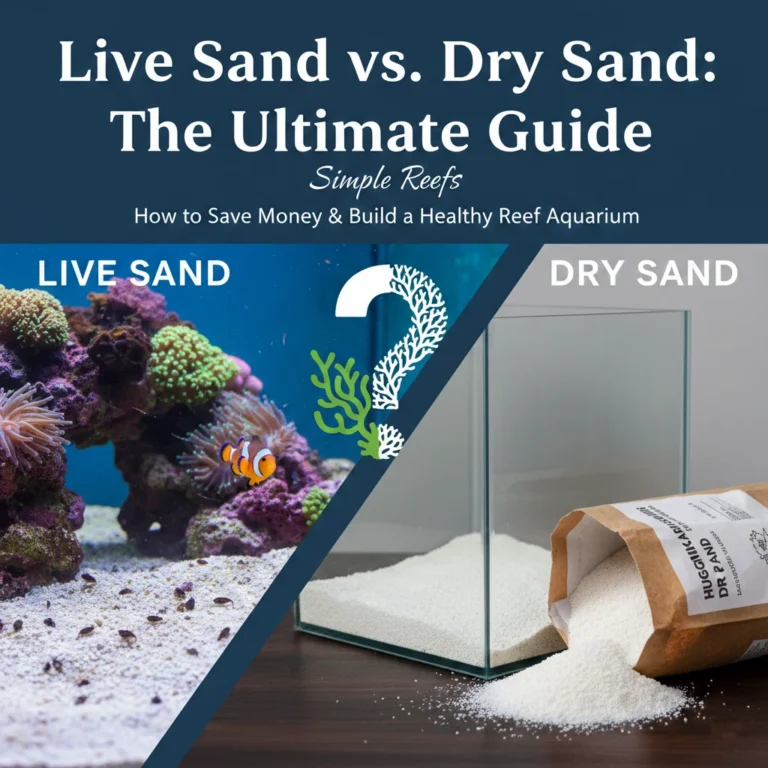
You might have even read our ultimate guide on choosing between Live Sand and Dry Sand to save yourself some money.
But once you have made those choices, you are immediately faced with another confusing wall of options at the fish shop. Fiji Pink, Bahamas Oolite, Hawaiian Black, Special Grade… what does it all mean? Well, we are going to tell you.
What Makes Marine Aquarium Sand Special?
It makes sense to start at the ground floor. When we refer to marine sand, we are not talking about the stuff you find in a children’s play pit or at the local builder’s yard. We are talking about a very specific type of sand that is specially picked for use in the saltwater hobby.
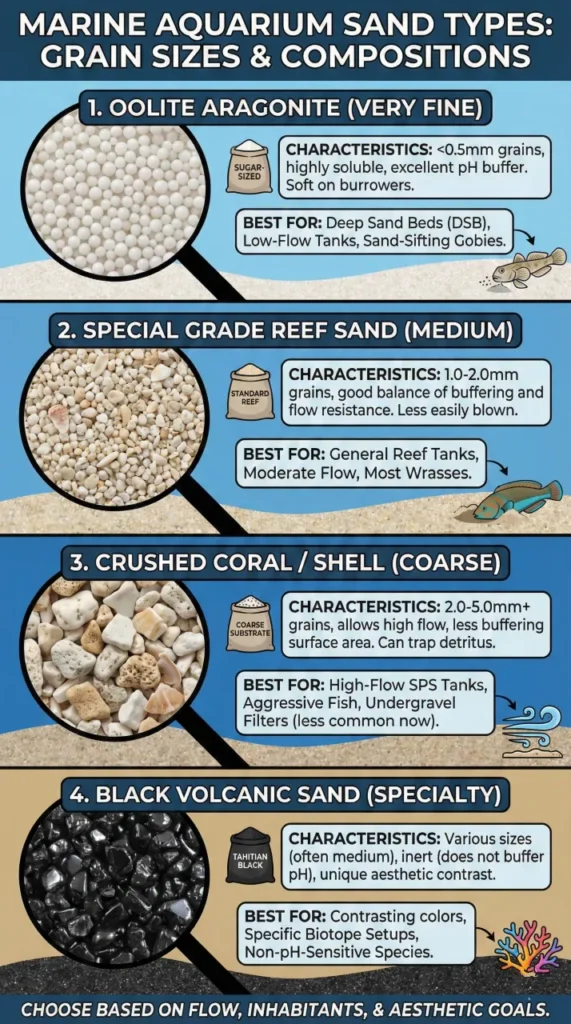
The vast majority of high-quality marine aquarium sand is made from aragonite. This is a calcium carbonate based substance that is formed naturally from the bones of long-dead coral and the shells of ancient molluscs.
Aragonite is the secret weapon of the marine hobbyist. Over time, it will slowly leech calcium into your water, effectively helping to stabilise and buffer the pH level of your reef.
You may also see bags of “Crushed Coral”. While this looks quite natural, it does not have the same buffering benefits as aragonite and the jagged edges make it unsuitable for burrowing creatures. For a beginner, sticking to aragonite sand is always the safest bet.
Where the subject becomes a little more complicated is in the different types of aragonite based sand. You aren’t just faced with the decision to buy plain old white or plain old yellow. There are many different types of marine sand, each with different pros and cons.
The 6 Most Popular Types of Marine Sand
Now that we know why aragonite is so important, let’s take a look at the most popular varieties you will encounter when shopping for your setup.
1. Fiji Pink (The All-Rounder)
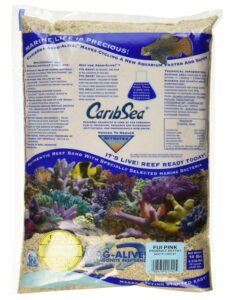
When it comes to the discussion of best marine aquarium sand, this is the one that many hobbyists will default to.
Fiji Pink is an incredibly popular type of sand that features a lovely, subtle pinkish hue under reef lighting. It typically features a grain size between 0.5mm and 1.5mm, which makes it an absolute sweet spot for a marine aquarium.
The grain size is perfect for burrowing creatures like snails and gobies, but it is just heavy enough that it will not get easily blown around the tank by standard wavemakers or powerheads.
This is the gold standard when it comes to beginner marine aquariums and it’s hard to go wrong, here. If you are ever in doubt, Fiji Pink is a fantastic default choice and is my personal preference for most standard setups.
2. Bahamas Oolite (The Fine Pearl)
Oolite is a very special type of sand that is ultra-fine grain (typically under 1.0mm). It forms in very shallow, extremely warm, and turbulent waters of the Bahamas through a process called chemical precipitation. This happens when dissolved calcium carbonate gathers around the outside of tiny particles known as seeds and crystallises.
💡 The Science Bit: What is Chemical Precipitation?
We just mentioned “chemical precipitation”, but what does that actually mean? Unlike regular beach sand, which is just larger rocks and shells smashed into tiny pieces by the waves over millions of years, Oolite sand is essentially “grown” directly from the water.
In very warm, shallow tropical seas (like the Bahamas), the ocean water becomes completely overloaded with dissolved calcium. When that hot water gets tossed around by heavy waves, the ocean’s chemistry shifts. The invisible calcium suddenly crystallises out of the water and wraps itself around a tiny piece of floating debris, such as a microscopic shell fragment or a speck of dust.
As it rolls around in the current, it builds up layer upon layer of calcium, eventually forming a perfectly smooth, round pearl of sand. You are literally putting tiny chemical pearls into your aquarium!
The result is a beautifully formed, almost pearl-like sand that looks absolutely breathtaking. It is the softest sand available and feels fantastic, making it heaven for burrowing wrasses.
However, because it is so fine and light, it is very prone to blowing around the tank. Oolite is definitely not suitable for high-flow SPS coral systems. You need to keep those wavemakers pointed up and it can take a lot of fiddling around with positioning to get it right.
3. Special Grade / Reef Sand (The High-Flow Safe Bet)
You may see “Special Grade” mentioned frequently on reef forums. This is essentially standard reef sand that has been sifted to a very specific grain size of 1.0mm to 2.0mm.
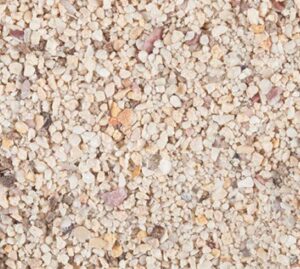
This is a massively popular type of sand because it contains all the typical aragonite benefits along with a nice, clean beige hue. Most importantly, its slightly larger, heavier grain size means it resists getting blown around by powerful wavemakers.
If you plan on keeping corals that require heavy water movement, this is the sand for you. Think of it as a nice middle ground that manages to be quite fine but still fairly stubborn when it comes to blowing around.
I use special grade in one of my smaller marine tanks and it almost entirely refuses to blow around which is extremely handy due to how much flow I have in the tank.
In small systems, the delicate balance between pushing water around and creating a sandstorm is even harder to navigate. Finer grade would create an endless cloud of sand so special grade is an excellent compromise.
4. Natural Reef (The Coarse Option)
Natural Reef sand is another type of aragonite that is formed by the breaking down of coral and shells. It is primarily intended to provide a very authentic, rugged aesthetic to a marine aquarium.
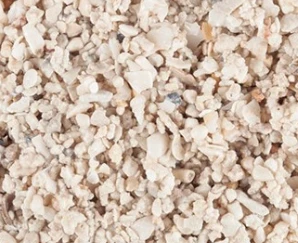
It has a very typical yellow hue (like traditional beach sand) and features much larger grain sizes, ranging from 3.0mm all the way up to 5.5mm.
The idea behind this type of sand is to look as close as possible to what you would actually see on the bottom of a living reef. It’s a mix of grain sizes, very coarse, quite heavy, and extremely natural looking.
Because it is so coarse and heavy, Natural Reef sand is brilliant for extreme high-flow systems. It is made up of naturally broken-down coral skeletons and marine shells, making it is almost entirely calcium carbonate (aragonite)
With this in mind, it’s, perhaps, the most suitable type of sand for use in high flow systems while still enjoying the benefits of its PH buffering properties.
You should avoid it if you plan on keeping delicate sand-sifting gobies. You’ll want something much finer, in that case.
5. Hawaiian Black (The Showstopper)
Hawaiian Black is a truly unique, jet-black type of sand that looks utterly fantastic. It gets its striking colour and distinct properties from a mix of aragonite and volcanic minerals like basalt, harvested right from volcanic regions.
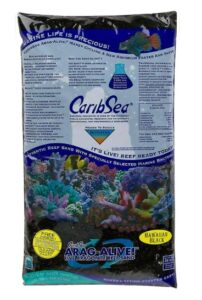
Indian Ocean Black Sand and Malaysian Lava Sand are two other alternatives to Hawaiian Black that share similar volcanic properties.
The grain sizes vary quite a bit, from a super-fine 0.3mm up to 3.5mm. There’s something about this sand that just makes certain displays look breathtaking. It’s really not suitable for all applications, though, and many prefer lighter colour substrate.
While its deep black hue looks incredibly striking and makes the colours of your fish pop beautifully, it is worth noting that any white detritus or fish waste will be highly visible on its dark surface, meaning you might need to vacuum it a bit more often.
There is one massive catch that you need to be aware of before choosing this dark substrate. Because Hawaiian Black is primarily made from inert volcanic rock and basalt rather than crushed coral, it does not provide the same natural pH buffering benefits as white aragonite sand.
If you choose to go with a black sand bed, you will need to rely much more heavily on your weekly water changes, your salt mix, or chemical additives to keep your alkalinity and pH stable. It is a strict trade off for that striking aesthetic.
⚠️ Warning: Hawaiian Black Sand and Glass Cleaners
Here is a crucial tip if you choose Hawaiian Black sand. Because of its unique volcanic mineral makeup, this sand is actually slightly magnetic! When you are cleaning your glass with a magnetic algae scraper, you must be incredibly careful not to get too close to the sand bed. The scraper will easily pick up the black grains, and when you drag the magnet across the glass, it will leave deep, permanent scratches everywhere.
6. Crushed Coral (The Heavyweight)
Crushed Coral is exactly what the name suggests. Instead of fine, smooth grains of sand, this substrate is made up of much larger, jagged pieces of broken coral skeletons and shells. Because it is made of real coral skeletons, it is pure calcium carbonate, meaning it will still provide excellent pH buffering benefits for your water.
Because the pieces are so large, typically ranging from 2.0mm all the way up to 5.0mm or more, this is the ultimate choice if you are running extreme water flow in your tank and are terrified of sandstorms. It simply will not blow around, no matter how high you crank your wavemakers.
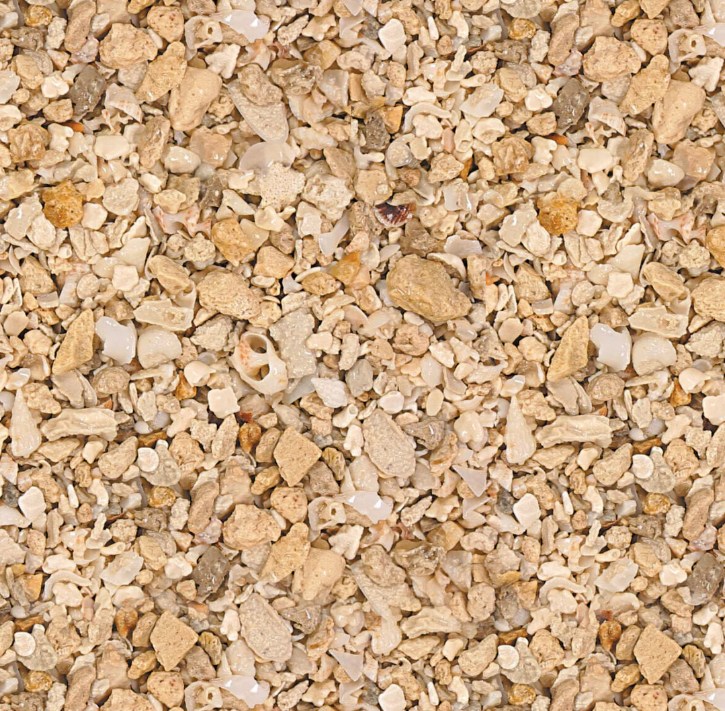
However, Crushed Coral comes with a few massive warnings for beginners. Firstly, those large gaps between the heavy chunks are the perfect trap for uneaten fish food and fish waste. If you do not vacuum a crushed coral bed religiously, it will quickly turn into a nitrate factory and fuel nuisance algae.
Secondly, the jagged edges are incredibly sharp. You must avoid crushed coral completely if you plan on keeping sand-sifting gobies, burrowing wrasses, or bottom-dwelling creatures, as it will cut their mouths and bellies to ribbons.
💡 Other Specialty and Unusual Sands
Beyond the main types above, there are a few other niche options you might spot on the shelves at your local fish shop:
- Bimini Pink: Often confused with Fiji Pink, this is another beautiful aragonite option. It features a similar whitish-pink hue but has a slightly larger, coarser grain size. It is a fantastic alternative if you want that pink aesthetic but need something slightly more resistant to high water flow.
- Live Sand: Products like CaribSea Arag-Alive come wet in the bag, pre-populated with beneficial bacteria to help give your tank’s nitrogen cycle a head start. We are going to talk about that in just a second.
- Regional Volcanic Sands: You might find black or dark sands harvested from the Indian Ocean or Malaysia. These offer a very similar dramatic aesthetic to Hawaiian Black.
- Dyed Sands: Available in bright neon blue, green, or purple. These are purely decorative and do not provide the vital pH buffering benefits of natural aragonite. They are best avoided for functional reef setups.
The “Goldilocks” Option: The Perfect Beginner Balance
If you are feeling completely overwhelmed by all these choices, you are not alone. Most beginners starting a Simple Reef have the exact same vision. You want a beautiful mixed reef with some colourful soft corals and a few LPS (Large Polyp Stony) corals. You also want a classic cleanup crew and maybe a Watchman Goby or a sand-sifting starfish.
This creates a very specific problem. LPS corals (like Hammers, Torches, and Duncans) require moderate water flow to stay healthy and catch their food. If you choose an ultra-fine sand like Oolite, that moderate flow will whip up a constant, cloudy sandstorm.
On the flip side, if you choose a heavy Crushed Coral to handle the flow, your delicate burrowing fish and snails will injure their bellies trying to dig into it. You need something right in the middle.
💡 The Sweet Spot: 0.5mm to 1.5mm
For the ultimate “Goldilocks” setup where the sand is not too light and not too heavy, you need to aim strictly for the 0.5mm to 1.5mm grain size.
Fiji Pink is the absolute undisputed champion of this category. It is soft enough that a wrasse can dive into it safely, it holds its shape perfectly when a Pistol Shrimp builds a cave, and it is heavy enough to stay firmly on the glass under the moderate flow required for LPS and soft corals. If you are ever in doubt, buy Fiji Pink!
💡 Wait, Should I Buy This Sand “Live” or “Dry”?
Once you have picked your perfect grain size and colour, you will notice one final choice at the fish shop: almost all of these sands are sold in both Live and Dry versions.
- Live Sand: Comes wet in a bag, pre-loaded with beneficial bacteria to help start your tank’s nitrogen cycle, but costs significantly more.
- Dry Sand: Comes completely dry and sterile. It takes a little longer to establish bacteria, but it will save you a massive amount of money.
We highly recommend reading our Ultimate Guide to Live Sand vs. Dry Sand before you open your wallet. It will show you exactly how to safely set up your tank while keeping your budget intact!
Quick Comparison: Grain Size vs. Water Flow
To make your shopping trip a bit easier, here is a quick cheat sheet on how these different types of sand match up with your tank’s equipment and livestock.
| Sand Type | Average Grain Size | Ideal Water Flow | Good for Burrowers? |
|---|---|---|---|
| Bahamas Oolite | 0.1mm – 1.0mm | Low Flow | ⭐⭐⭐⭐⭐ (Perfect) |
| Fiji Pink | 0.5mm – 1.5mm | Medium Flow | ⭐⭐⭐⭐ (Great) |
| Special Grade | 1.0mm – 2.0mm | High Flow | ⭐⭐⭐ (Acceptable) |
| Hawaiian Black | 0.3mm – 3.5mm (Mixed) | Medium Flow | ⭐⭐⭐ (Acceptable) |
| Natural Reef | 3.0mm – 5.5mm | Extreme High Flow | ⭐ (Avoid) |
| Crushed Coral | 2.0mm – 5.0mm+ | Extreme Flow | ⭐ (Avoid Completely) |
The one overriding theme here is to match your sand to your reef. This ties into the 5 year plan we talked about in our earlier articles on budget reef ownership.
Planning now can save money later. If you plan to own burrowing creatures, you need to buy the correct sand now, even if you don’t add them for a year or two. If you plan to own delicate SPS coral that needs high flow, you need heavier sand now to save you both money and hassle down the road.
💡 Tip: Match Your Sand Grade to Your Livestock
It is vital to think about the fish and invertebrates you plan to keep before buying your sand.
- Fine Sand (Oolite/Fiji Pink): An absolute must for burrowing wrasses (like the Yellow Coris Wrasse), sand-sifting starfish, and Nassarius snails. Coarse sand will severely scratch their delicate bellies.
- Medium Sand (Special Grade): If you want the classic Pistol Shrimp and Watchman Goby pairing, this is your best option. Sugar-fine sand simply collapses when they try to dig tunnels, whereas medium grains lock together nicely to hold the structure of their underground caves.
In Short: Pick For Your Fish, Not Just Your Eyes
It is incredibly tempting to just pick the sand that looks the prettiest on the bag. However, taking a few minutes to consider the flow rate you need for your corals and the habitat required for your bottom-dwelling fish will save you massive headaches down the line.
If you want a safe, beautiful, all-rounder that works in 90% of beginner tanks, Fiji Pink is always a winner. Once you have picked your style, make sure to read our guide on whether you should buy the Live or Dry version of that sand to keep your budget perfectly in check. Thanks for reading!
Frequently Asked Questions
What is the best sand for a marine aquarium?
There is no single best sand, as it depends on your tank setup. For beginners with average water flow, Fiji Pink or Special Grade aragonite sand provides the best balance of natural aesthetics, pH buffering, and resistance to blowing around in the current.
Why is marine sand made of Aragonite?
Aragonite is a natural calcium carbonate material formed from old coral skeletons and shells. In a marine aquarium, aragonite slowly dissolves, releasing calcium and carbonates into the water. This acts as a natural buffer, helping to keep your tank’s pH stable at optimal reef levels.
Can I use black sand in a saltwater tank?
Yes, Hawaiian Black sand is very popular in marine tanks because it makes the bright colours of fish and corals stand out. However, you must be careful when cleaning the glass, as volcanic black sand is often slightly magnetic and can get trapped under your algae scraper, scratching your aquarium glass.
Are there other specialty sands besides Fiji Pink and Oolite?
Yes! Some marine hobbyists use live sand, which comes pre-populated with beneficial bacteria to help cycle your tank faster. There are also other volcanic or black sands from regions like the Indian Ocean or Malaysia that provide a dramatic look similar to Hawaiian Black. Dyed sands in blue, green, or purple are also available, but these are mainly decorative and don’t offer the natural buffering benefits of aragonite, so they’re best for display tanks rather than functional reef setups.