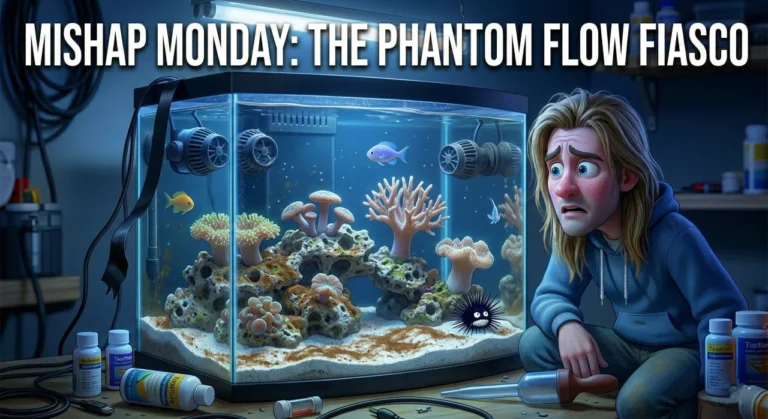


Mishap Monday: The Live Rock Gamble That Failed Spectacularly
Welcome to Mishap Monday here at Simple Reefs! This is the part of the week where I put my pride to one side and share a spectacular failure from my own reefing journey. And believe me, there have been plenty. This hobby is a massive learning curve, and it is far better (and much cheaper) for you to learn from my mistakes than to make them yourself. Today, we are talking about my Live Rock Gamble and how it failed spectacularly.
Table of Contents
More specifically, we are talking about the time my extremely careful, three month quarantine process failed completely and introduced a nightmare into my display tank.
My Live Rock Gamble: The Upgrade and The “Perfect” Rock
A few years back, I made the exciting jump from a 260 litre aquarium to a 425 litre aquarium. It was a pretty big step up in size, and I grabbed a bargain, too. This was a Red Sea Reefer 425XL – my first tank with a sump and it looked phenomenal.
It came with its own share of problems though, not least of which was getting it home. A van rental and some help from my fiancee and a friend later and it was sitting in my living room. The first thing I realised was that my current aquascape was going to look very bare in the new glass box.

It was time to expand. I didn’t want an entire section of my tank to suddenly feature bright white dry rock so I opted for 10KGs of Life Rock to fill it out while maintaining the aged look. After adjusting everything, I was incredibly happy with how it looked but with one caveat… There was one decent sized spot that had no rock.
Again, I didn’t want bright white dry rock so I headed down to my local fish shop to pick up some extra rock to fill the space. These guys are fantastic. They have an amazing selection of fish and coral, excellent care standards, and they have been around since I was a child. I trust them implicitly, so none of what follows is their fault. Pests are just a natural reality of the ocean.
I picked out a huge piece of live rock that looked fantastic. It had a great shape, lots of nooks and crannies, small bivalves, and a ton of sponges growing on it. It was obviously very mature. It was the perfect piece of live rock.
Mistake Number One: The Asterina Army
I got the rock home and did the sensible thing: I placed it into my coral quarantine tank so I could observe it for a few weeks before it went into the main display.

Within a single day, a small Asterina starfish appeared on the glass. Now, these tiny stars get a bit of a bad reputation in the hobby. There are certain types that will consume the dead flesh on corals, leading many hobbyists to panic and assume all small stars are evil.
In reality, most Asterina stars are just harmless algae eaters that form part of your clean up crew. Knowing this, I was not bothered at all. I decided to just leave it in the quarantine tank to do its thing.
What I underestimated was their ability to multiply. They only need to drop a single leg for a brand new starfish to form. Eventually, I placed that rock in my main tank. Let’s just say I now have an epic, unstoppable army of tiny little starfish that emerge every single time the lights go out.
In fact, they have gotten so cocky that they now even happily sit on the glass in the middle of the day. I am basically recreating the night sky with tiny starfish rather than actual stars. Ah well!
The Invisible Menace (It Gets Worse)
While an army of tiny starfish is slightly annoying, my second purchase put that first piece of rock to shame. This happened in a nano aquarium so the damage was slightly less noteworthy.

I bought a much smaller piece of live rock from a completely different shop. Again, it looked beautifully aged. Having learned my lesson about assuming things were “clean,” I quarantined this rock for months… And I mean months!
I saw literally nothing on the surface. I turned it over every other day and blasted it with plenty of lights and flow to see if any ugly pests would come out to play.
Nothing. It was completely clear. At least three whole months passed before I confidently introduced this “sterile” rock into my aquarium. I smugly believed that I had done the right thing and had no reason to panic.
The Delayed Explosion
Fast forward a few weeks, and my fiancée points something out to me. Would you believe it, a large Aiptasia anemone was majestically waving in the flow, almost flipping the middle finger at me in pure defiance.
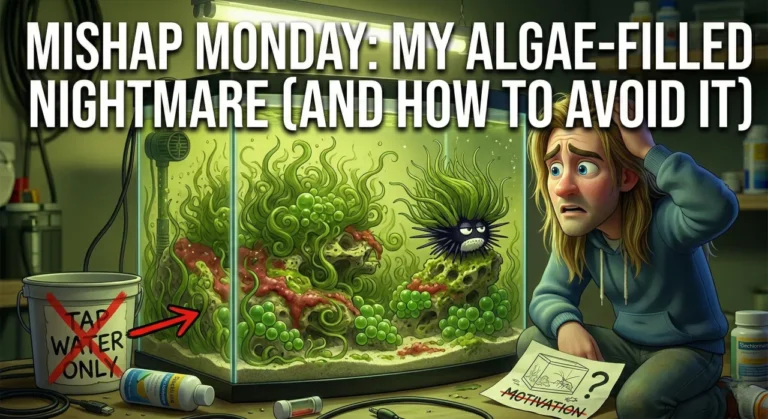
Four weeks after that, I was greeted by the Aiptasia’s horrible roommate: the shiny, green, marble like annoyance known as Bubble Algae.
I was going through a bit of a nutrient crisis at the time thanks to some ammonia riddled salt that you can read about right here. Guess how long it took for that Bubble Algae to completely overtake my tank?
I blasted the Aiptasia with treatments, but you had better believe it wasn’t done. It came back with a vengeance. The rest of my tank was filled with fairly sterile and not very mature dry rock, meaning the Bubble Algae had zero competition and immediately took off across the pristine surfaces.
The Fallout and The Lesson
As for the fallout, well I am still dealing with some of it years later. The Asterina stars still do not bother me too much, but that second rock caused permanent problems.
The Bubble Algae required a monumental effort to eradicate. I am talking about total tank blackouts, adding bottled bacteria, manual removal with tweezers, massive water changes, and running a UV steriliser.

As for the Aiptasia, I now have to keep a dedicated squad of Peppermint Shrimp just to keep the population in that tank under control. I’m not too bothered about that though, I am a huge fan of Shrimp.
The Mishap Monday Lesson
Live rock is always a gamble. Examining it closely and quarantining it for months is still not enough to guarantee 100% success. Pests can lie dormant deep inside the porous core of the rock for an incredibly long time.
You can only minimise the risk and even best practices can leave you fighting a plague of pests or algae that will make your marine aquarium journey a lot more frustrating.
There’s also a lesson in here for me, too. If I had inspected the underside more aggressively, identified early Aiptasia signs, and treated pre-emptively instead of reactively, this entire chain reaction could have been avoided.
Always purchase live rock with the utmost of caution because, sometimes, you are just buying someone else’s problems. Thanks for reading and happy reefing.
I write about my mistakes so you don’t make the same ones I did – Read more Mishap Monday disasters here – Mishap Mondays.
🛡️ How to Protect Your Tank
If you want to avoid spending a year fighting bubble algae like I did, you need to know exactly what you are looking at before you put your hand in your wallet. Read our brand new, ultimate guide on Buying Live Rock: What to Look For and Hitchhikers to Avoid to spot these hidden disasters while they are still in the shop!
Can live rock introduce pests even after months of quarantine?
Yes. Pests like Aiptasia and Bubble Algae can remain hidden deep within the porous structure of live rock for weeks or even months. Even with careful observation, they may not appear until conditions in your display tank allow them to thrive.
Are Asterina starfish harmful to reef tanks?
Most Asterina starfish are harmless algae grazers and part of a healthy clean-up crew. However, some varieties may irritate corals. Their rapid reproduction is often more of a visual nuisance than a true threat.
How does Aiptasia suddenly appear in a mature aquarium?
Aiptasia anemones often arrive as tiny, nearly invisible hitchhikers on live rock. They can stay unnoticed for long periods before emerging and spreading quickly, especially in nutrient-rich environments.
Can a single piece of live rock cause a Bubble Algae outbreak?
Unfortunately, yes. Bubble Algae can begin from a small unseen introduction. In tanks with low biodiversity or elevated nutrients, it can spread rapidly and outcompete other organisms.
Is live rock worth the risk compared to dry rock?
Live rock offers instant biological filtration and biodiversity, but it always carries some level of hitchhiker risk. Dry rock is more predictable but lacks natural microfauna. The safest approach is careful inspection, quarantine, and understanding the trade-offs before purchasing.