

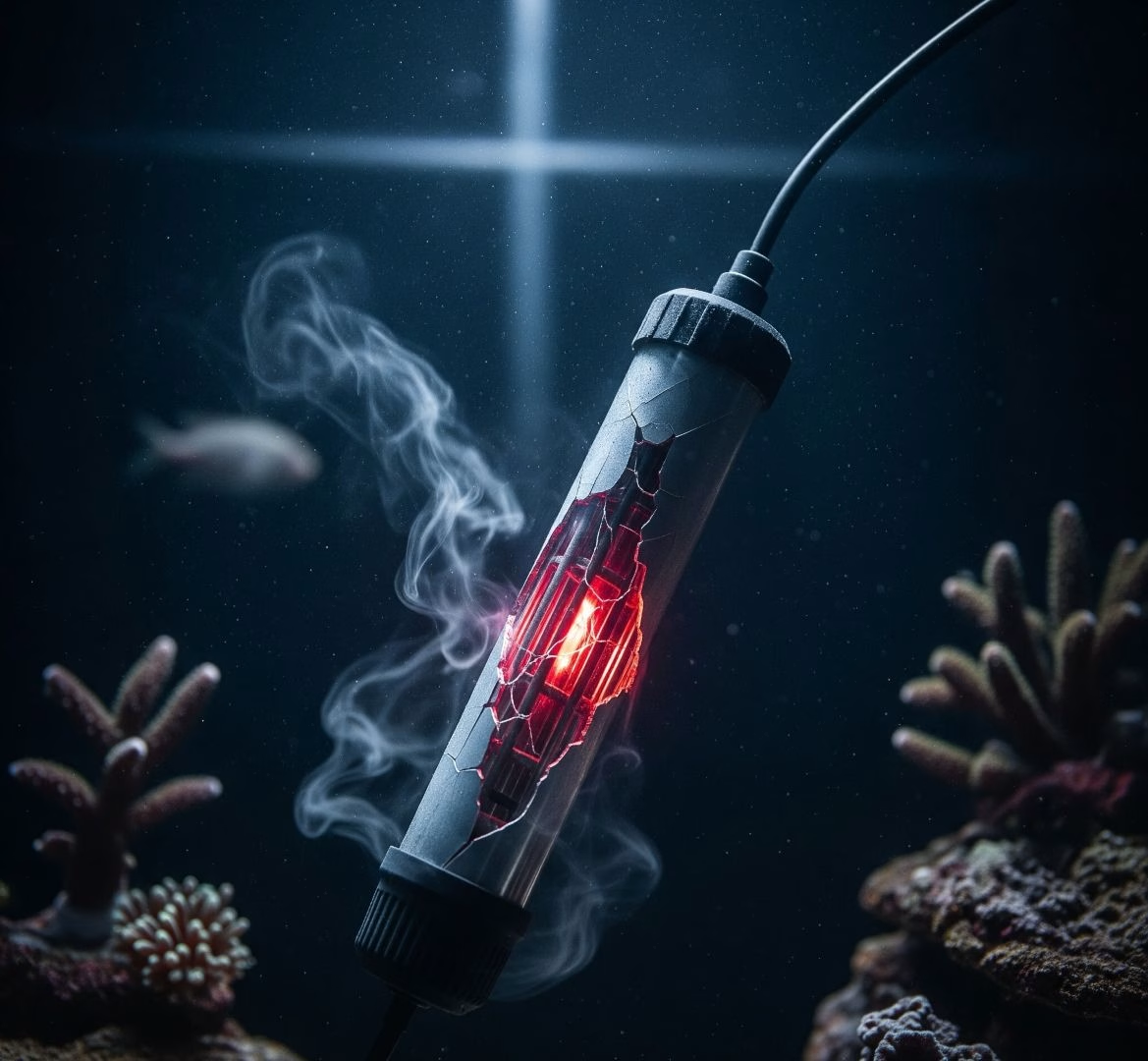
The Main Reasons Why Your Marine Aquarium Heater Might Fail
Welcome to Simple Reefs. We are a brand new website designed to take the stress and expense out of starting your very own marine aquarium. With us being a brand new website, we have been looking at some of the basics of Marine Aquarium ownership. One of the big topics that we have been looking at, as of late, is aquarium heaters. Today, we are looking at The Main Reasons Why Your Marine Aquarium Heater Might Fail.
Table of Contents
A Crucial Piece of Equipment
Let’s be honest for a second, a reliable heater is the underrated champion of a successful marine aquarium. After all, the creatures that dwell in your tank are, typically, from tropical seas that experience very little in the way of temperature fluctuations. We talk all about it in our article on the importance of marine aquarium heaters.
Maintaining stable tropical temperatures in your aquarium is absolutely crucial for the health of your fish and coral. They, quite simply, are not adapted or evolved to cope with large fluctuations of temperature.

Yet, for many aquarists, the marine aquarium heater is a notorious point of failure, often with completely devastating consequences. I would be lying if I were to say it’s not the thing I worry about most, when it comes to my tanks. Especially thanks to living in a cold house.
While no heater will last forever, a surprisingly short lifespan can often be attributed to a handful of preventable issues. Believe it or not, the way you are looking after your heater might be contributing to its likelihood of failure. Let’s take a look at the top reasons why your marine aquarium heater might fail and why it might not be lasting as long as it should.
1. Mechanical and Thermostat Failure: The Unavoidable Wear and Tear
At its core, an aquarium heater is a simple device with few moving parts. Making it something of a surprising that there are so many reasons why your marine aquarium heater might fail. The problem is, the components contained within it are, essentially, constantly working. This means that they are subject to a tremendous amount of wear and tear as time goes on. With wear and tear comes increasingly brittle points of failure.

The most common point of failure is the internal thermostat. This component, often a bimetallic strip or a simple electronic switch, cycles on and off thousands of times to maintain the set temperature. That’s a lot of work and work means accumulated wear.
Over time, these mechanical or electronic parts can begin to break, leading to one of two critical failures. In the best case scenario, the thermostat fails sticking in the “off” position, causing the tank to cool. If this is only short term, it might be nothing more than some added expense and a minor inconvenience.
If, however, the heater fails sticking in the “on” position, it won’t be able to turn off and will keep attempting to heat the water, believing that it is not as warm as it needs to be. This can rapidly overheat and, to put it quite bluntly, “cook” the aquarium’s inhabitants. Take a look at our article on How To Avoid Catastrophic Heater Failures in Your Marine Aquarium for more information.
This constant cycling of on off, on off, is the primary reason that even high quality heaters have a finite lifespan. We can’t expect them to last forever and we need to replace them frequently.
2. Physical Damage and Thermal Shock: Fragile Equipment
Many aquarium heaters are constructed with a glass tube that houses the heating element. While, at Simple Reefs, we strongly suggest avoiding glass heaters due to the explosion risk, a lot of people simply prefer them. This glass is susceptible to both physical damage and thermal shock.
Bumping the heater against rocks during maintenance or having large fish like a tang or Fox Face strike it can cause hairline cracks. If these cracks go unnoticed, saltwater can seep in, shorting out the electronics, weakening the structure and potentially causing stray voltage and electrifying the tank. You really don’t want to be putting your hand in the water with stray voltage.
An even more common, and often overlooked, cause of damage is thermal shock. This occurs when a hot heater is suddenly exposed to cooler temperatures. Say, for example, when you lift the heater out of the water when it is still on. Notice all of that steam leaving the surface of the heater? That’s going to cause a rapid increase in the heater’s temperature as it is no longer escaping into the water around it.

The most frequent scenario where this occurs is during a water change when the water level drops. This can expose part of the still operating heater to the air. It rapidly superheats, and when the tank is refilled, the cool water causes the hot glass to contract violently and crack. This is one of the most common reasons why your marine aquarium heater might fail but it is often overlooked.
Similarly, removing a hot heater from the tank and placing it on a cool surface can have the same effect. To prevent this, always unplug your heater for at least 15-20 minutes before performing a water change or removing it from the aquarium. This can be a bit annoying, especially if you are stuck waiting for it to cool but it is absolutely essential.
3. The Saltwater Environment: Salt Creep and Mineral Build-up
The saltwater environment, itself, is a major contributor to a shortened heater lifespan. I mean, it’s easy to see just how corrosive salt water can actually be. The big problem is. usually, Salt creep. This is the crystalline residue left behind when saltwater evaporates.
This salt creep can actually work its way up the power cord and into the top of the heater where the controls and seals are located. Over time, this can corrode electrical connections and compromise the waterproof seals, allowing moisture to penetrate the unit.
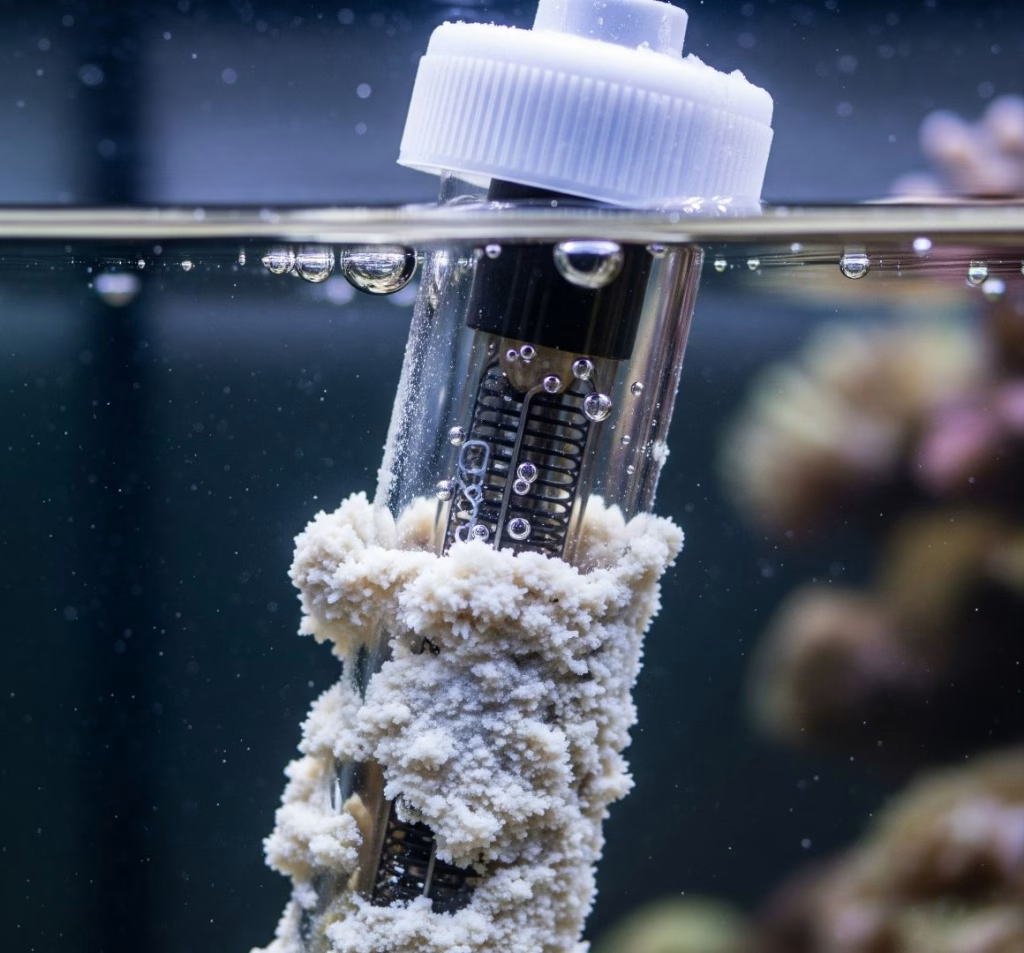
Additionally, marine aquariums are rich in calcium and other minerals that can precipitate and form a hard, crusty layer on the heater’s surface. This build-up, which can also include the very pretty but quite difficult to remove, coralline algae, acts as an insulator, forcing the heater to work much harder and for longer periods to heat the surrounding water.
This increased workload puts significant strain on the internal components, leading to a much shorter operational life. Regular cleaning to remove these deposits is essential for both efficiency and longevity. Take a look at our upcoming article on how to clean your marine aquarium heater.
4. Improper Placement and Lack of Water Flow: Overheating Guaranteed
Where you place your heater is absolutely critical, especially when it comes to reasons why your marine aquarium heater might fail. So much so, in fact, that we have put together an entire article on where to place your heater in your aquarium. If it’s in an area with very low water flow and movement, the water immediately around the heater will warm up very quickly. This will trick the thermostat into shutting off before the entire tank has reached the desired temperature.
While that doesn’t seem like a huge problem outside of a tank that never gets fully warm, it actually shortens the life of the heater. The heater will end up in a loop of frequent, short cycling where it comes off and on repeatedly. This accelerates wear and tear on the thermostat as it is doing more than it should be doing.
Furthermore, poor flow can create localised “hot spots” that can damage the heater itself or harm any nearby aquatic life. This is kind of similar to what happens when warming liquid in a microwave and not stirring the water. Certain parts become hot while others stay cold.
The ideal placement for a heater is in an area of high, constant water flow, such as in the sump’s return pump chamber or near the output of a powerhead in the display tank. This ensures even heat distribution and more accurate temperature readings by the heater’s internal thermostat. Remember to check the article above for more information.
5. Undersized Heaters: A Constant Struggle
Using a heater that is not powerful enough for the volume of your aquarium is a sure fire way to wear it out prematurely. This goes doubly so for houses that are quite cold. An undersized heater will have to run almost constantly to maintain the target temperature, especially in cooler ambient room temperatures.
While this might not seem like a big deal, marine aquarium heaters aren’t really designed to work like this. They are designed for short cycles of heating and short cycles of cooling. This relentless operation puts maximum strain on the heating element and thermostat, significantly reducing their lifespan.
A general rule of thumb is to use 1 watt of heater power per 1 litre of water. This will vary a bit depending on your home’s ambient temperature, though. Why not take a look at our handy heater wattage calculator to see what size heater you will need for your time?
In larger tanks, using two smaller heaters instead of one large one can provide redundancy. If one heater fails, the other can often maintain a safe temperature until the faulty one is replaced. This also distributes the heating load, reducing the strain on any single unit meaning they will both last longer.
6. A Power Surge: The Unexpected and Unpredictable
Let’s be honest, nobody expects a power surge to damage their equipment. It’s just not something that everyone plans for. Whether it is caused by faulty electrics in your home, a storm, or a squirrel deciding to end its life in an elaborate attempt to chew through the local power cables. It is just not something you give much consideration to. That is, until it happens to you.
A power surge can easily cause a marine aquarium heater to break. If you are lucky, it will just be a blown fuse but the result could be a lot worse. Your heater’s element may pop, electronics may fail, or it may even cause a stray voltage that you will only find when you put your finger in the water.
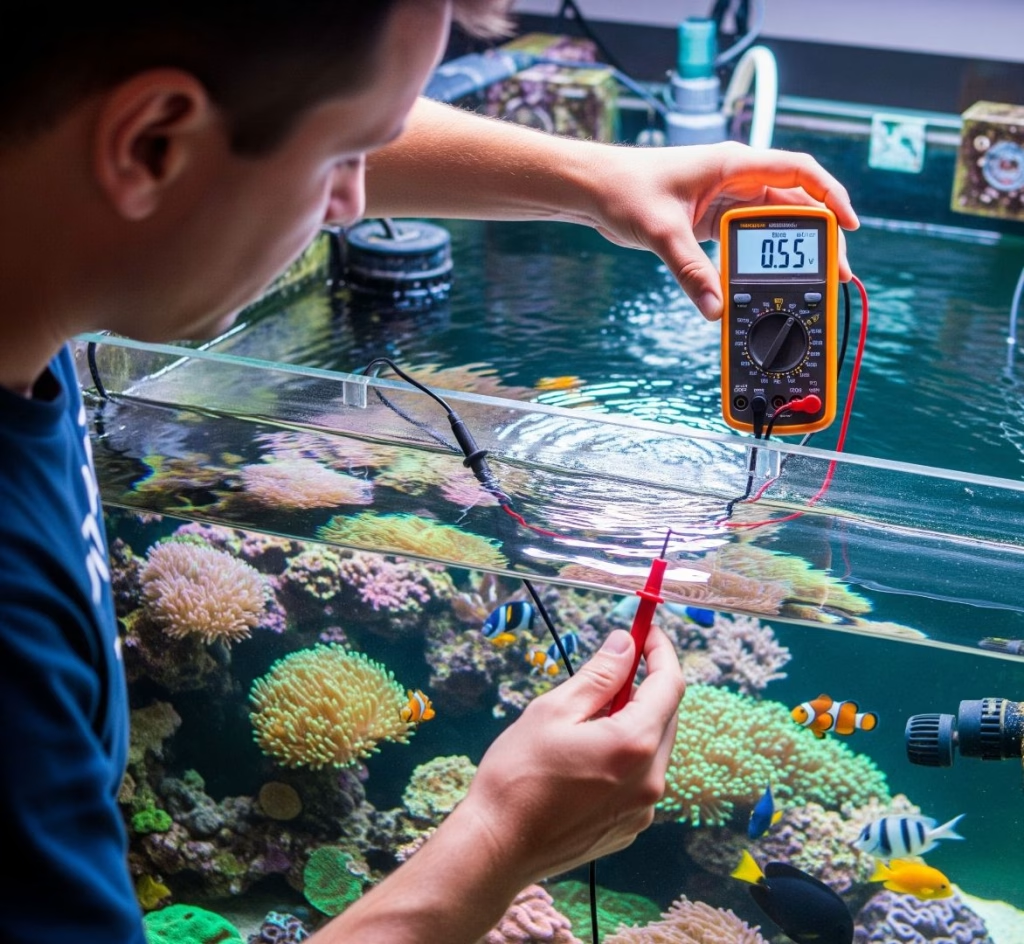
Power surges can be more common than you think, as well. We actually lost a projector and a television to a power surge during a patch of Thunder Snow (sounds cool but was very expensive) last winter. It also stopped my beer fridge from working for months on end. It randomly kicked into action again recently and has been working ever since.
My fish tanks were fine as I always use surge protector plugs with them and you should as well. Surge protector extension leads are just a little more expensive than regular ones and will take the hit rather than damage your equipment should a surge occur.
In Short
By understanding these common points of failure, aquarists can take proactive steps to help extend their marine aquarium heater’s lifespan. Proper placement, regular cleaning, and careful handling during maintenance all make a big difference. Helping you to protect your valuable marine ecosystems from a sudden and catastrophic temperature swing. I am going to be adding to this article as and when I think of useful points. Thank you very much for reading and spending your time at Simple Reefs.