
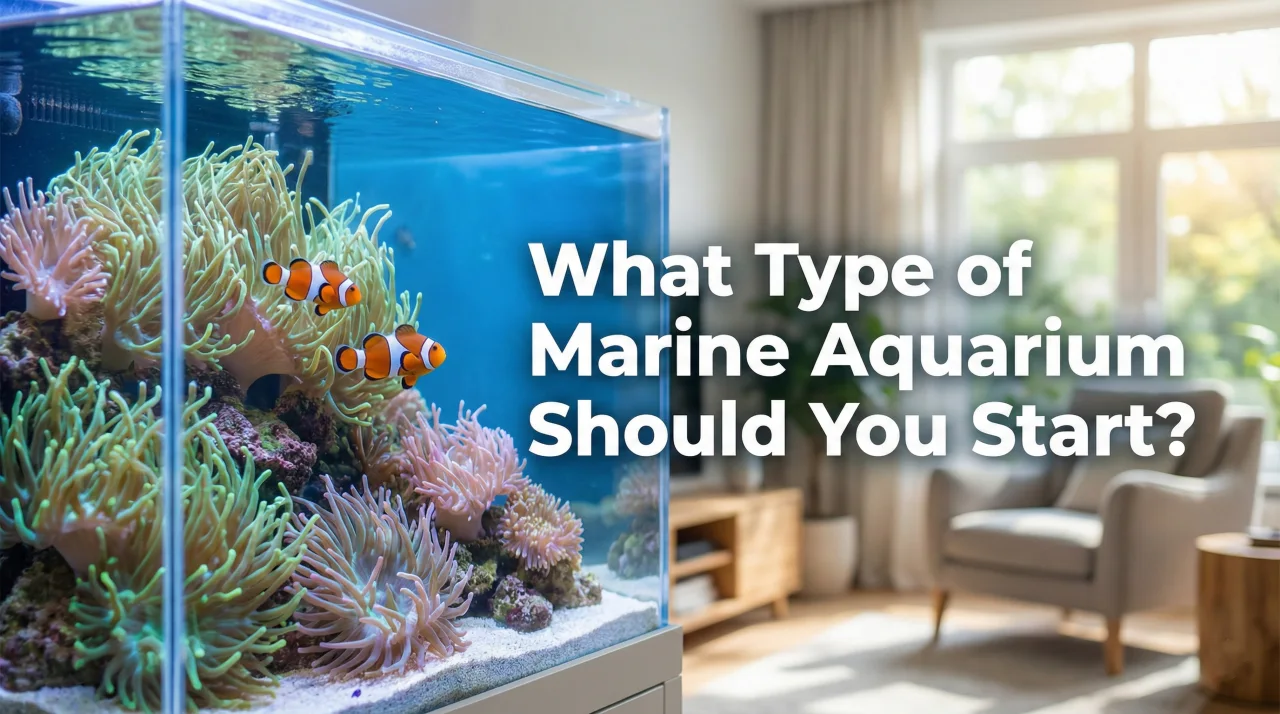
What Type of Marine Aquarium Should You Start? A Beginner’s Guide
Welcome to Simple Reefs. This article forms part of an ongoing series on bringing your own slice of the ocean to your home as easily as possible and without breaking the bank. Today, we are asking a very simple, yet very important question: What Type of Marine Aquarium Should You Start?
Table of Contents
Key Takeaways
- Patience is profitable: Rushing leads to algae, dead fish, and wasted money.
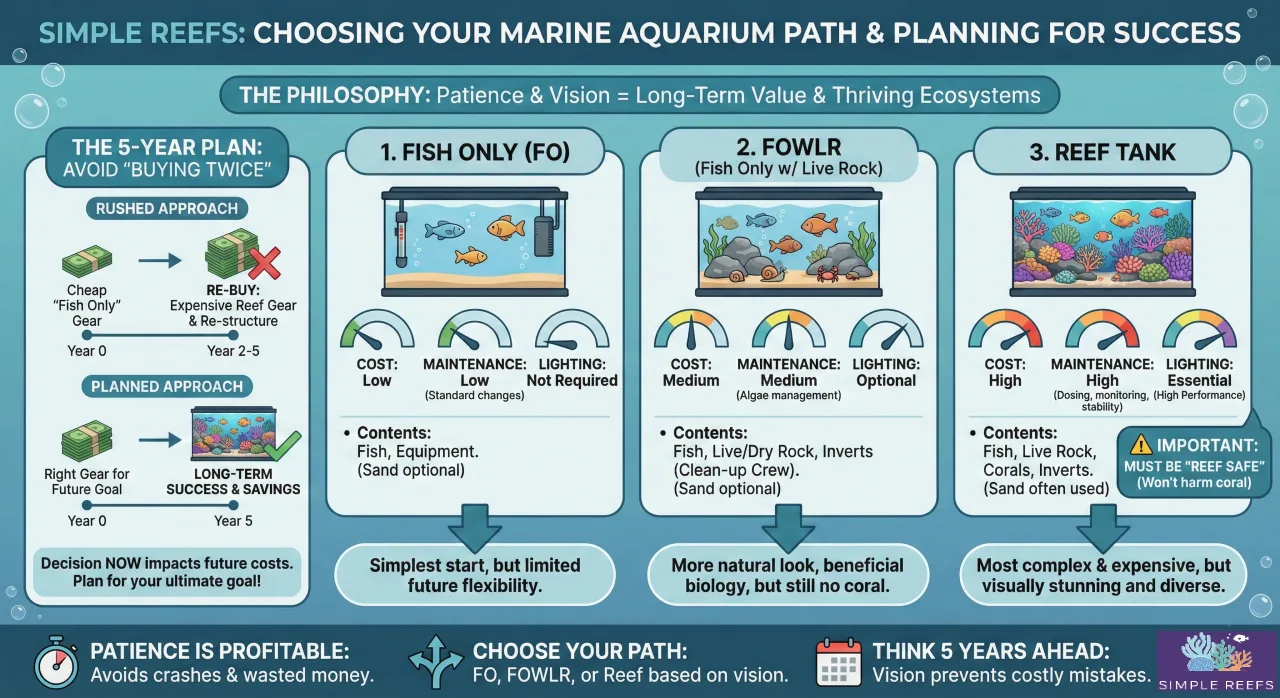
- Three main paths: Choose between Fish Only (FO), Fish Only With Live Rock (FOWLR), or a full Reef.
- Think 5 years ahead: Buying equipment or planning for a fish-only tank now might make it impossible to add coral later without re-buying and re-structuring everything.
This article is going to help you to answer a very simple question – What Type of Marine Aquarium Should You start. We’ll do that by looking at what it is you want to achieve and how you want your aquarium to look in several years time.
It may sound obvious, but it’s the most important decision you’ll make early on. I simply want to help you avoid some of the mistakes that I have made. You see, Simple Reefs is based on the knowledge that I have acquired when it comes to putting together marine aquariums on a budget. But, even more than that, it is based on the many mistakes that we all make along the way.
Before we give a second thought to what type of tank we want to buy, what equipment we plan to use, or what we will be filling our tanks with, we need to envision the future.
What do you see when you picture your tank in five years? Is it simply a few fish bobbing around, greedily approaching the glass and begging for food? Or is it something more elaborate with rocks, swaying coral, and a bunch of invertebrates calling it home?
The Importance of Patience in Saltwater Hobbies
Before we go any further, we need to learn the importance of patience. We want to set up our marine aquarium in a way that is affordable and attainable, right? That is why you are here on Simple Reefs. But you want long-term success, too.
“We are going to do things on a tight budget but we are, also, going to be patient and do things the right way.”
Doing things the right way and exercising patience will have massive long-term benefits for you, your coral, your fish, and your wallet. If you aren’t convinced, I suggest you take a little break later and head over to YouTube.
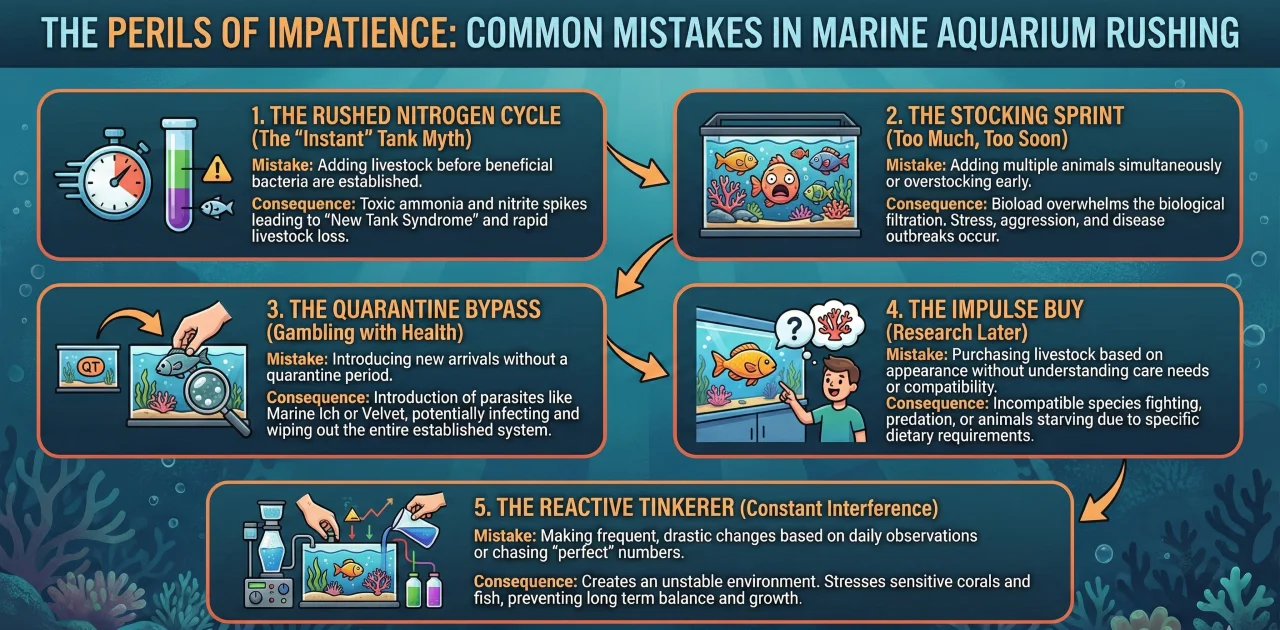
Take a look at what happens when people rush this hobby. It isn’t pretty. The mistakes I made along the way were an inconvenience to me; other people’s mistakes are fatal to their aquarium’s inhabitants. That is something we want to avoid at all costs.
3 Questions to Ask Before Buying a Tank
Marine aquarium ownership can get complicated quickly. Following a plan simplifies the future, minimises hassle, and reduces the chance of expensive mistakes. Before you start buying equipment or livestock, ask yourself these three key questions:
1. Size: How Big Should Your Tank Be?
Tank size is one of the most important decisions you’ll make and one that bites hobbyists hardest if chosen poorly. A tank that’s too small may seem cheaper, but it makes maintaining water quality harder, limits the number of fish you can safely keep, and can restrict future upgrades like adding coral or larger fish.
Guidelines by setup type:
- FO (Fish Only): 20–50 gallons is a manageable starting point for beginners.
- FOWLR (Fish Only With Live Rock): 20–75 gallons gives you room for live rock, invertebrates, and a slightly larger fish collection.
- Reef Tank: 75+ gallons is ideal for coral growth, stable water parameters, and flexible livestock options.
💡 Nano Tanks: Nano tanks (Tanks under 20 Gallons) are a fantastic option for aspiring hobbyists who are 100% sure that they only want a small tank. Many require specialist sized equipment which will not be reusable if you want to upgrade in the future. It’s important to consider the increased restrictions and complexity of Nano Aquarium ownership, too.
While they’re visually appealing and fit easily on desks or shelves, they are much less forgiving than larger tanks. Water chemistry fluctuates quickly, fish and coral have less space to thrive, and maintenance must be precise and frequent.
Why bigger is better if you aren’t sure: Larger tanks buffer against mistakes, keep water chemistry stable, and make long-term expansion much easier. Think of it as investing in insurance for your tank’s future. One sentiment you will hear repeated in this hobby is people relating that they wished they went bigger to start with.
2. Equipment: All-in-One or DIY Setup?
Do you want a purpose-built marine aquarium that includes filtration, lighting, and circulation, or are you comfortable selecting and combining equipment yourself? Purpose-built systems simplify setup but may limit flexibility. They often require items made specifically for that tank due to size limitations in back-chambers. Custom setups give full control but require research and patience.
3. Inhabitants: Fish, Coral, or Both?
What do you want to live in your aquarium? Fish only, a mix of fish and invertebrates, or a full reef with coral? Your choice here will influence tank size, lighting, filtration, and ongoing maintenance. Planning ahead prevents costly mistakes and ensures your tank is compatible with the species you love.
The 3 Types of Marine Aquarium Setups
Generally speaking, there are three types of setups. You will see these acronyms quite often in marine aquarium ownership.
| Type | Cost | Maintenance | Lighting Needs |
|---|---|---|---|
| FO (Fish Only) | Low | Low | Not Required |
| FOWLR (Fish Only w/ Live Rock) | Medium | Medium | Optional |
| Reef Tank | High | High | Essential |
1. FO (Fish-Only)
This is self-explanatory and is essentially the marine equivalent of a basic freshwater fish tank.
- The Setup: Nothing in the aquarium other than fish and your equipment. Sand is optional.
- The Maintenance: No high-end lighting is needed, dosing trace elements is not required, and standard water changes suffice. This is as basic as it comes.
2. FOWLR (Fish Only With Live Rock)
A more common alternative to the FO option. Again, this is self-explanatory. We have a marine aquarium with a rock scape made from either Live Rock or Dry Rock.
- The Setup: Rocks, sand (optional), fish, and perhaps a few marine invertebrates (snails, hermit crabs) to help keep the place clean.
- The Maintenance: Since we don’t have coral, lighting isn’t critical. However, rocks are likely to grow algae, so maintenance is slightly more involved than a bare tank. We’ll need more water changes to cope.
3. The Reef Aquarium
Now we move onto the most difficult, complex, and expensive option. A reef aquarium features live rock, often sand, and a variety of coral.

These coral can vary in requirements from simple soft coral (fleshy coral without a skeleton, fairly hardy) right up to stony coral. Stony corals love powerful lights, build skeletons using elements in your water, despise dirt, and will bleach at the mere thought of you skipping a water change.
⚠️ Important Concept: “Reef Safe”
If you choose a Reef Aquarium, every animal you buy must be “Reef Safe.” This means the creature will not harm, eat, or irritate your coral.
You may also see “Reef Safe With Caution.” This means the creature typically leaves coral alone but may peck at it out of curiosity or consume it if they get extremely hungry.
This is the most expensive option. Lighting is essential for coral health. Dosing depleted elements may be necessary. Water changes will be more frequent, and water monitoring is essential.
Why You Need a 5-Year Plan
So ask yourself, once again: in five years time, what does your marine aquarium look like?
There is nothing worse than planning for a fish-only aquarium only to suddenly find yourself in the fish shop eyeing up that bright green, glowing beauty of a coral that’s selling for a special discount – only to realise that incorporating it means changing everything or risking it being eaten by your “Not Reef Safe” fish.
Simple Reefs Budget Tip 💰
If you want coral in the future, plan for it now. Leave space on your rocks for placement. Ensure your rock scape is far enough back to allow flow and light. If you buy cheap “fish only” lights now, you will have to buy expensive “reef lights” later. Buying twice is the enemy of the budget reefer!
If we want to go the whole hog, fish, invertebrates, and coral, we need to factor in compatibility while addressing the complex task of maintaining water quality while feeding a bunch of fish that can’t stop pooping. It’s a tough balance and preparing for it sooner rather than later is key to a smooth experience
Frequently Asked Questions
What is the easiest marine aquarium for a beginner?
A FOWLR (Fish Only With Live Rock) is widely considered the “sweet spot” for beginners. It offers the biological stability of live rock without the complex lighting and chemical maintenance required for delicate corals. It looks great, too.
Can I convert a fish-only tank into a reef tank later?
Yes, absolutely. I did that myself with a FOWLR. However, this is where the “5-Year Plan” comes in. If you buy cheap lights and low-flow pumps now, you will have to throw them away and buy expensive reef-spec gear later.
It is often cheaper to buy reef-capable gear from day one, even if you don’t add coral for a year. It sounds counterproductive, but it saves money in the long run.
What happens if I put a non-reef-safe fish in with coral?
Disaster, usually. Non-reef-safe fish (like many Butterflyfish or large Angels) view coral as food. They will peck at and destroy your expensive coral colonies.
Always check compatibility lists before buying.
⚠️ Are nano tanks good for beginners?
Nano tanks (usually under 20 gallons) are popular because they’re small, affordable, and look great on desks or countertops.
However, they are actually much less forgiving than larger aquariums. Water chemistry changes quickly, temperature swings happen faster, and even a small mistake (like overfeeding) can cause big problems.
Nano reefs are best treated as a specialist setup, ideal for experienced hobbyists or for very carefully planned stocking with hardy species. Soft coral and a couple of clowns? Go for it! Delicate Acropora? Save that for the experts.
The Next Step? Planning Your Equipment
Now that you’ve explored the different types of marine aquariums and laid out a 5-year plan for your tank, it’s time to get practical.
Which equipment do you absolutely need from day one, and what can wait until your reef, or fish-only setup, grows?
In our next guide, ‘Marine Aquarium Essentials: What You Really Need (and What Can Wait)’, we’ll break down the must-have gear, smart add-ons, and future upgrades to make your marine aquarium both manageable and enjoyable. The journey is just beginning and Simple Reefs will be with you throughout.