
Which Type of Heater Is Right For Your Marine Aquarium?
Welcome to Simple Reefs. We are a brand new website designed to take the stress and expense out of starting your very own marine aquarium. With us being a brand new website, we have been looking at some of the basics of Marine Aquarium ownership. One of the big topics that we have been looking at, as of late, is aquarium heaters. That brings us to an important question – Which Type of Heater Is Right For Your Marine Aquarium?
Table of Contents
The Importance of Marine Aquarium Heaters
We have already talked loads about the importance of maintaining a stable temperature in your marine aquarium. The creatures in your tank are, for the most part, from tropical climates that typically range between 24-28 degrees Celsius. In their natural environment, your fish, invertebrates, and coral won’t experience much in the way of dramatic temperature fluctuations but why is this?

Well, that’s because the sea is so vast that it acts as a thermal buffer that prevents large temperature fluctuations. We talk all about it in this article right here. Your aquarium, however, is absolutely tiny in comparison and has no such ability to maintain its own stable temperature. As the seasons pass and your home cools and warms in response, your tank water will begin to fluctuate as a result.
That’s where the humble marine aquarium heater comes in. It is impossible to understate the importance of including a heater in your aquarium to keep temperatures stable. Even homes that stay warm during the winter and utilise air conditioning in the summer will still experience fluctuations throughout the day. That’s why it is still important to purchase a heater even in warm homes and warm climates. You never truly know what the weather might bring.
Which Type of Marine Aquarium Heater is Right for Me?
If you have decided to do the sensible thing and include a marine aquarium heater on your shopping list. You might be wondering which type of heater is right for you. Well, let’s start off by taking a look at the different types of heaters that you may commonly find in the marine aquarium hobby.
- Glass Heaters: These are the most basic types of heaters around. When you think of a marine aquarium heater, glass heaters are, likely, the kind that jump to mind. They are, usually, a long, cylindrical, glass tube with a control knob to adjust the temperature, a light to indicate when they are heating, and a pair of clips with suction pads to attach the heater to your aquarium. They feature an inbuilt thermostat (usually a bi-metallic strip) and a coil heating element. Pros: Very affordable, easy to install, come in a range of different outputs.
Cons: Ugly in main display, prone to shattering which can cause damage to tank and harm residents, thermostats can fail. - Titanium Heaters: These heaters look almost identical to a glass heater only they are, typically, metallic and don’t feature an inbuilt thermostat. Titanium heaters are designed to be robust, long lasting, and almost indestructible. They are intended to be used with an external controller to measure the water temperature and turn the heater on as and when needed. Pros: Virtually shatter proof, often more efficient, long lasting.
Cons: Can be expensive, usually require a separate controller. - Low Profile Heaters: These are aquarium heaters designed for tight spaces. They tend to be very flat and, often, quite compact to use with smaller tanks. These don’t tend to feature high wattage outputs but can be useful when discretion is needed. Pros: Very discreet, great for small spaces, often come with external controllers.
Cons: Not available in a wide range of heat output, often quite expensive, some are prone to failure, particularly the thermostats. - Advanced Heaters: These types of heaters usually offer advanced features like LED displays, plastic shells, more discreet designs, overheating protection, and sometimes feature external controllers. Pros: Safer thanks to the plastic shells, don’t tend to be as likely to burn fish, advanced features can be useful.
Cons: More expensive, some features are rather unnecessary, can still shatter if interior heater is glass but typically does less damage, thermostats can still fail. - Inline Heaters: These types of heaters are less common but will typically be housed outside of the tank and contained within a canister filter or something similar. This will then be plumbed into your aquarium, effectively pulling water from your tank through it, heating it up, and then pushing it back to the tank. Pros: Keeps the heater out of sight of the display, efficient heating.
Cons: Can be tough to setup, introduces new leak points, not practical for all types of aquariums, needs maintenance and cleaning. - Combined Heater and Chiller: This is a seriously advanced system that is made more for high end displays. This works by pulling water from your tank into it, heating the water or chilling the water to reach the desired temperature, before pushing the water back into the tank. Pros: Efficient and offers the ability to chill or heat depending on requirements.
Cons: Very expensive, not always practical, high end option for advanced tanks that need more control.
So, as you can probably see, that’s a pretty wide variety of different heaters. While all of them will do the job of heating up your water and helping to maintain thermal stability, in your marine aquarium. There are some things that we should really consider when deciding what type of heater to go for.
Glass Heaters Can Be Hazardous
There are a few things we need to consider when it comes to marine aquariums. Namely, we are going to need the heater to be as efficient as possible and as robust as possible. Marine aquariums are expensive. The fish, coral, and invertebrates are also expensive and, above all else, they are incredibly delicate.

We really don’t want to put ourselves in a situation where we are risking the lives of the residents of our tank. With this in mind, I would suggest avoiding Glass Aquarium Heaters wherever possible.
I know, it’s frustrating because they are the most affordable and easiest to pick up out of all of the heaters. Hell, you can probably head down to some supermarkets and find glass heaters in the pet section.

The problem is, the risk of explosion is very real. I only use glass heaters for heating my water ready for mixing salt. Last year, I had two glass heaters explode in the bucket. These heaters weren’t old, they weren’t being pushed to their limits, they weren’t being knocked around. They were stuck to the side of the bucket and they exploded, tripping my circuit breaker and sending glass into the bucket.
If this would have been inside an aquarium, the results would have been horrifying. Fish and coral would have been killed, the clean up would have taken days, and the tank itself might have had a hole blown through it. This actually happens to people all the time when using glass heaters. I really don’t think the risk is worth it.
If you absolutely have to use a glass heater, you need to buy a plastic cover for it. This will prevent fish being able to burn themselves on it and it should contain the glass should an explosion happen. If you can’t find a cover that fits, you really should search for a different type of heater. They just aren’t safe.
Advanced Heaters are Slightly Better
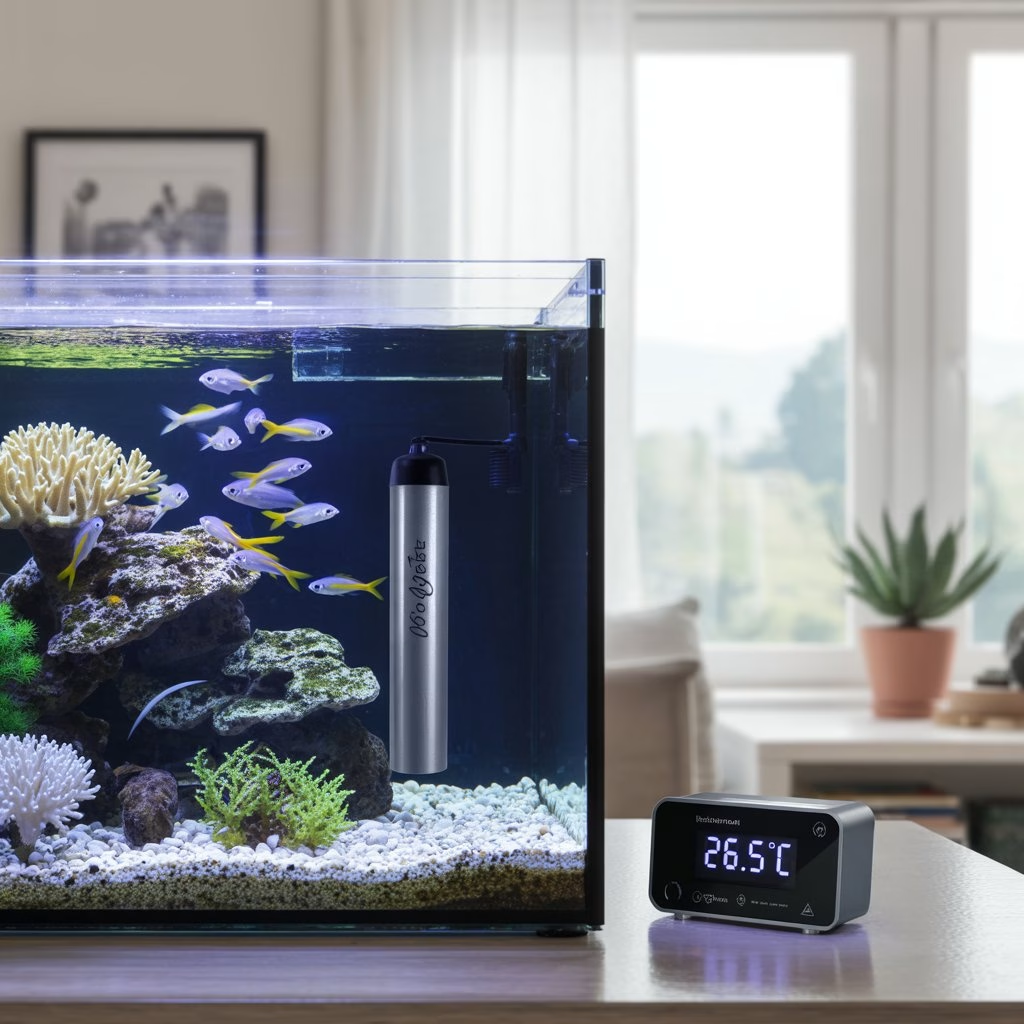
More advanced heaters, like the one shown in the image here, tend to be a lot better than your basic glass heater. Many feature plastic casings, as standard, which will help keep curious mouths away from the heat which would, otherwise, cause burns.

Advanced heaters often feature useful LED displays to tell you what the temperature in the tank currently is. This can make monitoring your aquarium easier and also make setting the desired temperature a lot more simple. They sometimes include helpful warnings, as well, to tell you when the heater is lacking flow or has a problem.
The most important feature to look for on an advanced aquarium heater is “Overheat protection“. This is, basically, a secondary thermostat that will kick in when your primary thermostat fails and turn the heater off. Some also do the same thing by activating a circuit breaker if the temperature hits a certain point. This can be life saving for your aquarium as we discuss below.
The Benefit of External Heater Controllers
You might be wondering what an external heater controller is. Well, it is quite simple – an external heater controller measures the temperature of your water and turns your heater on or off depending on when it is needed. This removes the heater’s in-built thermostat from the equation.
An external controller will usually feature a display, a temperature probe, and a plug socket. They are, really, quite simple to use.
- You take your heater and position it in your tank or sump
- You plug the heater into the plug socket on the external controller
- You place the thermometer probe from the controller into the water away from your heater
- You set the desired temperature on your external controller.
The controller will detect the temperature of your tank’s water using the temperature probe. When it notices a drop of a certain, pre-set amount (usually a degree or two), it will activate the power to your heater, turning the heater on. When the probe detects that the temperature is back to normal, the controller will turn your heater off.

External controllers are far more reliable than regular heaters. The thermostats are less likely to fail, they are more accurate, and as long as you keep the temperature probe clean they are very reliable. Even if your aquarium heater has a built in thermostat, you should still consider using an external controller.
If the thermostat on your heater were to fail, an external controller will turn the heater off before it ever has a chance to cause a problem. Some external controllers come with wi-fi features, as well. My Ink bird will notify me on my phone when there is a problem. Just make sure that your probe is actually submerged securely at all times.
It’s hard to understate how useful this is and they really aren’t all that expensive. We will be going into this more in an upcoming article. Having this extra layer of protection is incredibly important because:
Heater Failure Can Be Catastrophic
Regardless of which type of submersible heater that you purchase, the most likely failure point, outside of fragile glass, is the thermostat. The job of the thermostat is to continuously monitor the temperature of the water surrounding the heater. When the thermostat detects a temperature drop, it turns the heater on to warm the water.
When a thermostat on a heater fails, it, unfortunately, can be utterly catastrophic. They tend to fail in such a way as to leave the heater permanently switched on, rather than off. This can mean that your heater is stuck heating the water far beyond the originally intended temperature.
I have seen numerous cases of this happening, leaving people with a tank that is virtually annihilated from the increased temperatures. There are some harrowing cases on the internet relating this situation, it’s really quite sad.
The best way to avoid this is to use two heaters rather than one and to use an external thermostat. We are going to talk all about this in an upcoming article. More advanced heaters, as mentioned above, have some redundancy features that will prevent overheating using a secondary thermostat or circuit breaker. This can prevent a real tragedy for just a few extra pounds.
The Best Heater For Marine Aquariums
The best type of heater for marine aquariums is, without question, a titanium heater coupled up with an external controller. Titanium heaters are more efficient due to their design and they are virtually indestructible.

You don’t have to worry about it randomly nuking itself while you are in bed and blowing a hole in the side of your tank or sump. If a titanium heater breaks, it will just stop working.
Titanium heaters don’t typically feature integrated thermostats. You have to use them with an external controller meaning they won’t fall foul of a failing thermostat. The external controller will turn the heater on as and when it is needed.
Due to the fact that titanium heaters appear to heat the water more efficiently and external controllers are both more customisable and more accurate.
Titanium heaters can save money on electricity as they will only be coming on when they are needed. This can actually make them the cheaper option in the long term, despite the initial increased investment.
My Suggestions for Marine Aquarium Heaters
Although it might seem expensive, my sincere suggestion is to purchase a titanium heater and an external controller. It’s the safest option, the most efficient, the longest lasting, and the most likely to save you money and hassle in the long term. I will be putting together an article with some suggested brands of heater and controller shortly.
If you simply can’t purchase this ideal combo, my second suggestion would be an advanced heater. Try to purchase one with overheating protection, solid reviews, and a plastic case to protect the residents of your tank from burns. If you can couple this with an external controller, that’s even better.
Although they are cheap, I would seriously suggest avoiding glass heaters. The risk of explosion is just too high and the consequences of that too severe. It isn’t worth it for the sake of saving a few quid. Especially when you consider the fact that they can simply stop working for no reason at all.
Other Considerations
There are a few other things that we should consider when it comes to marine aquarium heaters.
Digital Thermometers: It is always important to purchase an external thermometer for your marine aquarium. Digital thermometers come with probes that you can leave submerged. Keep the digital display somewhere easy to see and check it multiple times a day. That way, if you encounter any heater related problems, you will realise before it becomes a problem.

Heater Size and Wattage: When it comes to the size of heater that you need for your tank. That’s all going to depend on the volume of water in your aquarium. This is the total volume of water including your sump if you have one. Aquarium heaters are measured in Watts. The general rule of thumb is around 1 watt of heater power per litre of water. So, for example, a 500 litre tank would require at least a 500 watt heater. This can vary greatly in colder homes, though.
You can use our handy Marine Aquarium Heater Wattage Calculator to work out just how big of a heater you need. It will allow you to calculate your wattage based on the size of your tank and the temperature of your home.
When Two Heaters are Better Than One: Redundancy is incredibly important in a marine aquarium. Particularly larger marine aquariums and that is where a special heater rule comes into play. For any tank over 150 litres, it is highly recommended to use two smaller heaters instead of one large one.
For example, in a 300-litre tank where you would need approximately 300 watts of heating power, use two 150-watt heaters. This provides a crucial safety net. If one fails, the other can maintain a baseline temperature, and if one gets stuck ‘on’, it’s less likely to dangerously overheat the tank before you notice.
Positioning Your Heater: Positioning your heater correctly is very important. So much so that I have written a whole damn article about it. Go and check out our guide to positioning your heater to find out where you should place it for optimal performance.
In Short
A marine aquarium heater is an absolutely essential piece of equipment but does require some careful planning and a certain degree of caution. Keeping all of these things in mind should guarantee that you have the most hassle free heating experience possible. Heating your marine aquarium is a crucial part of maintaining a healthy tank but it always pays to be safety conscious. Thanks for reading and spending your time with Simple Reefs.