
Are Heater Controllers a Necessity or a Luxury for Your Marine Aquarium?
Welcome to Simple Reefs. We are a brand new website designed to take the stress and expense out of starting your very own marine aquarium. One of the big topics that we have been looking at, as of late, is aquarium heaters. Today, we are going to try to answer an important question – Are Heater Controllers a Necessity or a Luxury for Your Marine Aquarium?
Table of Contents
Stable Temperatures Are Crucial to The Health of Your Reef
Something that we always emphasise on Simple Reefs is that, when it comes to marine aquariums, stability is king. It really doesn’t matter which part of reef keeping we are referring to, either. It all counts.
As hobbyists, we spend a ton of time meticulously balancing salinity, nitrate levels, alkalinity, and lighting, but one of the most critical and often overlooked parameters is temperature. In fact, we talk all about it in this article right here.

A stable temperature is paramount for the health of everything in your tank – fish, corals, invertebrates, even those tiny wee-beasties that do a lot of cleaning up in the background. While every aquarium heater comes with its own internal thermostat, a growing number of seasoned hobbyists argue that relying on that alone is a high stakes gamble.
An Advanced but Affordable Solution – The Heater Controller
Enter the humble external heater controller. This is a dedicated device designed to offer a superior level of control and safety. No longer will you have to rely on the accuracy of your heater or the reliability of its internal thermostat. A heater controller does all of that for you.

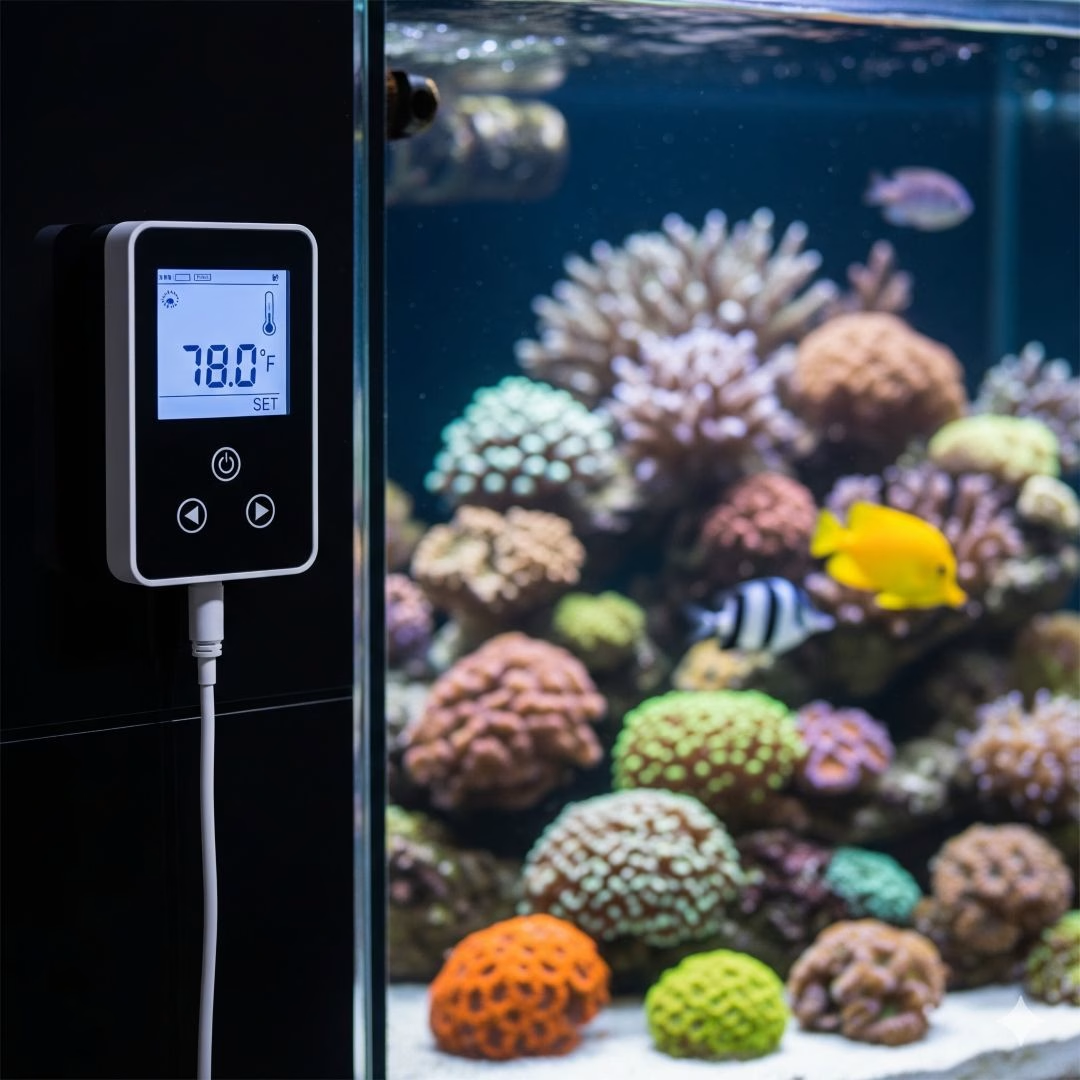
Before we start, let’s just clarify what we’re discussing here. A heater controller is an independent electronic device that sits between your heater and your plug socket. It consists of a temperature probe that you place in the aquarium and a control box with one or more plug sockets. You plug your heater(s) into the controller, place the temperature probe in your tank or sump, and set your desired temperature on the controller’s interface.
The controller then constantly measures the water temperature via its temperature probe. If the temperature drops below your set point, it supplies power to the heater, turning it on. Once the desired temperature is reached, it cuts the power.
Heater controllers not only offer an additional layer of protection. They also, often, come with a bunch of handy features to make your marine aquarium fishkeeping life a lot simpler. These can include, but aren’t limited to, alarms when temperatures hit a certain point, Wi-Fi connectivity to change settings from your phone, text based alerts when things go wrong, and the option to include a cooling fan into your setup that turns on when the water gets too warm.
This simple mechanism provides a powerful layer of security and precision as well as expanding the range of options you have at your disposal. But is it an essential piece of equipment or an expensive over complication? That is the big question. Let’s dive into the pros and cons of adding a heater controller to your marine setup.
The Pros: The Case for Ultimate Control and Comprehensive Safety
Let’s take a look at the pros first. This section is, obviously, going to be quite a lot larger and more extensive than the cons but that is a good thing. There are a ton of great reasons to include a heater controller in your setup.
1. The Ultimate Failsafe: This is, without question, the number one reason to own a heater controller and the entire reason why I am writing this article. Aquarium heaters can fail in two ways: they can fail to turn on, leading to a cold tank, or they can get stuck in the “on” position. There are many reasons why this may happen, as you can see in this article right here.
While a cold tank is a bit of a pain, it is rarely a tank-wiping scenario. A “stuck-on” heater, on the other hand, is a catastrophic event that can quickly overheat and “cook” your entire aquarium, killing everything within hours. Take a look at our article on recovering from heater failure.
A heater controller acts as a crucial failsafe that can prevent the more catastrophic of these two scenarios and alert you when the other occurs. Here’s how you do it. You set the thermostat on your actual heater (assuming you are using a heater with a thermostat) slightly higher (e.g. 26∘C or 79∘F) than the controller’s set point (e.g. 25∘C or 77∘F).
In normal operation, the controller manages the temperature. If the controller were to fail and leave the power on, the heater’s internal thermostat would still kick in and turn it off at 26∘C, preventing a disaster. More importantly, if the heater’s internal thermostat fails and gets stuck on, the external controller will still cut the power when the water reaches 25∘C, saving your tank. This redundancy is priceless, particularly in large or complex reefs.
2. Increased Precision and Stability: The thermostats built into most heaters, especially budget models (I’m looking at you glass heaters), are often simple bimetallic strips that are not particularly accurate. They can be susceptible to wide temperature swings (hysteresis), causing the temperature to fluctuate by a degree or, in some cases, even more.
External heater controllers use more sensitive digital thermistors, resulting in a much tighter control range. This micro-stability reduces stress on your tank’s inhabitants, which is especially important for sensitive corals and fish. Some heater controllers will allow you to adjust the temperature drop tolerance before the heater comes on, offering even more micro-level stability.

3. Increased Efficiency: With increased precision comes increased efficiency. A heater controller tends to be more accurate meaning it will spend less time warming your water when it doesn’t need to be warming your water. This is going to save you money in the long run, extend the lifespan of your heaters, and is better for the environment.
4. Centralised Control and Ease of Use: For larger tanks that require multiple heaters, a heater controller can be a bit of a game changer. Instead of trying to calibrate two or three individual heater dials and match them up. You simply plug them all into the heater controller and let it do its thing. You can even use a double plug adaptor for multiple heaters.
It will manage all the heaters in unison from a single, easy to read, digital interface, ensuring even and consistent heating throughout the system. What’s more, if you buy a heater controller with an app or Wi-Fi features, you will be taking that ease of use to a whole new level. Worried about your tank while you are out working or doing some shopping? Open the app and you can put your mind at ease.. Or, as the case may be, realise you need to jump in your car and race home to fix something.
5. Monitoring and Alarms: Many modern heater controllers come with additional features that provide immense peace of mind. These can include:
- Digital Temperature Display: An at-a-glance confirmation of your tank’s temperature. Much easier than having to pull your heater out of the tank to check it.
- High and Low Temperature Alarms: The controller can emit an audible beep or a visual alert if the temperature strays outside of a specific safe range that you define, alerting you to a potential problem (like a heater failure or even something more obscure like a home air conditioning failure, heating failure, or a spike due to a heat wave) before it becomes critical.
- App Connectivity: Some controllers can connect to your Wi-Fi and send alerts directly to your phone, allowing you to monitor your tank from anywhere in the world. Believe it or not, you don’t need to spend astronomical amounts of money for features like this. Some are very affordable.
So, as you can probably see, that’s a lot of great reasons to invest in a heater controller. Let’s take a look at some of the cons.
The Cons: The Case Against Over Equipping
There are a couple of cons that we should talk about. One of which is, actually, a very valid concern that definitely deserves some extra consideration. Let’s take a look.
1. Additional Cost: The most significant barrier for many aquarists is the price. A reliable heater controller can cost anywhere from £30 to well over £100, sometimes costing more than the heater it’s meant to control. For someone on a tight budget, this can seem like a bit of a superfluous expense. This is especially the case when it comes to hobbyists who own smaller tanks or less complicated reefs.
2. Another Point of Failure: While a controller is designed to prevent failure, it is still an electronic device that can, itself, fail. The probe can lose calibration, the internal relay can stick, or the electronics could malfunction. While the probability is very low with a quality unit, it’s not zero. Choosing a cheap, unreliable controller could potentially introduce more risk than it mitigates.
I have actually experienced a temperature probe losing calibration. This allowed the tank to climb rapidly in temperature because it believed the tank was cooler than it was. I would have been in a very bad situation had I not included an external thermometer in my aquarium, something we talk about in our article on avoiding catastrophic heater failure.

3. Added Complexity and Even More Cabling: For those of us who champion simplicity, a heater controller adds another device, another probe, and even more cables to an already complex system. It’s one more thing to set up and potentially troubleshoot and something else that needs a screw putting up and a place to go. While basic models are very much “plug-and-play,” the setup and calibration can be a minor hurdle for absolute beginners. Some owners are simply not going to appreciate the added hassle.
4. Another Thing to Maintain: Heater controllers do add yet another item to your tank that needs maintenance. Sure, it’s not a lot of maintenance but it deserves mention. You are going to want to clean the probe every month or two, check the cabling for breaks, and reset the probe’s calibration every 3 months to make sure it stays accurate.
So, that’s not a great deal of cons but they are things that deserve consideration. Like I mentioned, I have had a heater controller’s temperature probe lose calibration and it can be a deadly scenario without having an external thermometer somewhere in view to recognise when the problem occurs. With all of that being said, I really feel like the pros of a heater controller massively outweigh the cons.
The Verdict: Do You Need A Heater Controller?
Well, the answer to this question really depends on your investment in the hobby. It also depends on your ability to spend a little more and accommodate another piece of equipment. Let’s take a look at who may need a heater controller.
- For the Serious Reef Keeper or Owner of Expensive Fish: In this scenario, a heater controller is, to be perfectly honest, non-negotiable. It is an insurance policy and absolutely essential to protecting your investment. The cost of a quality controller is a tiny fraction of the value of the livestock it protects. The peace of mind that comes from knowing your tank is protected from the most common and devastating equipment failure is worth every penny.
- For the Beginner with a Smaller, Fish-only Setup: It might be considered a luxury at the very start. You can get by without it but the danger of a heater failure will always lurk in the back of your mind. A heater controller should be one of the first major upgrades you consider. The risk of a heater failure is always present, and as you become more attached to your aquatic pets, the desire to protect them will grow. It’s the responsible thing to do.
- For any large system (>200 Litres): It is essential. Managing multiple heaters without a central controller is inefficient and lacks the critical failsafe mechanism needed to protect a large and valuable system. You don’t want to risk the life of your tank for the sake of a few quid.
Just about every marine aquarium owner can benefit from a heater controller. While it is something you can, perhaps, do without at the start. As your tank gets more complex and more expensive, it is an incredibly smart investment that can offer you significant peace of mind and may even protect you from a catastrophic heater failure somewhere down the line.
In Short
While an aquarium can technically run without an external heater controller, doing so leaves it vulnerable to a catastrophic heater failure. The benefits of safety, precision, and monitoring far outweigh the drawbacks of cost and minor complexity for almost every marine aquarist.
In the pursuit of a vibrant and thriving aquarium that will make your friends swoon and neighbours jealous, a heater controller is not just a gadget; it’s one of the wisest investments you can make. Stick with us and we will be bringing your some Heater Controller options very soon. Thanks for reading and spending your time at Simple Reefs.