
Mishap Monday: The Neglected Nitrate Test Catastrophe
Welcome to Simple Reefs. We are a brand new website designed to take the stress and expense out of starting your very own marine aquarium. We’ve been talking about marine aquarium test kits a lot, as of late. I decided this was probably a good time to show you how neglecting testing your water can lead to bigger problems. I am going to tell you a little story, now – Mishap Monday: The Neglected Nitrate Test Catastrophe .
Table of Contents
It’s Monday and we all know how much the beginning of the week sucks. With this in mind, I decided to start this Mishap Mondays section of the site. Unfortunately, despite my best efforts, much of my marine aquarium ownership journey has been punctuated by me having to learn things the hard way.
In this section of the site, I try to bring a little cheer to your life by regaling you with a story about a time I messed up or made a big mistake. Hopefully my shared experience can help you to avoid going through the same issues that I went through.
Spoiler alert: I am not one of those people who makes false promises but I imagine you will be very surprised at the reason my nitrates shot through the roof. The issues here were down to more than my neglected testing. Keep reading!
Setting The Scene For Disaster!
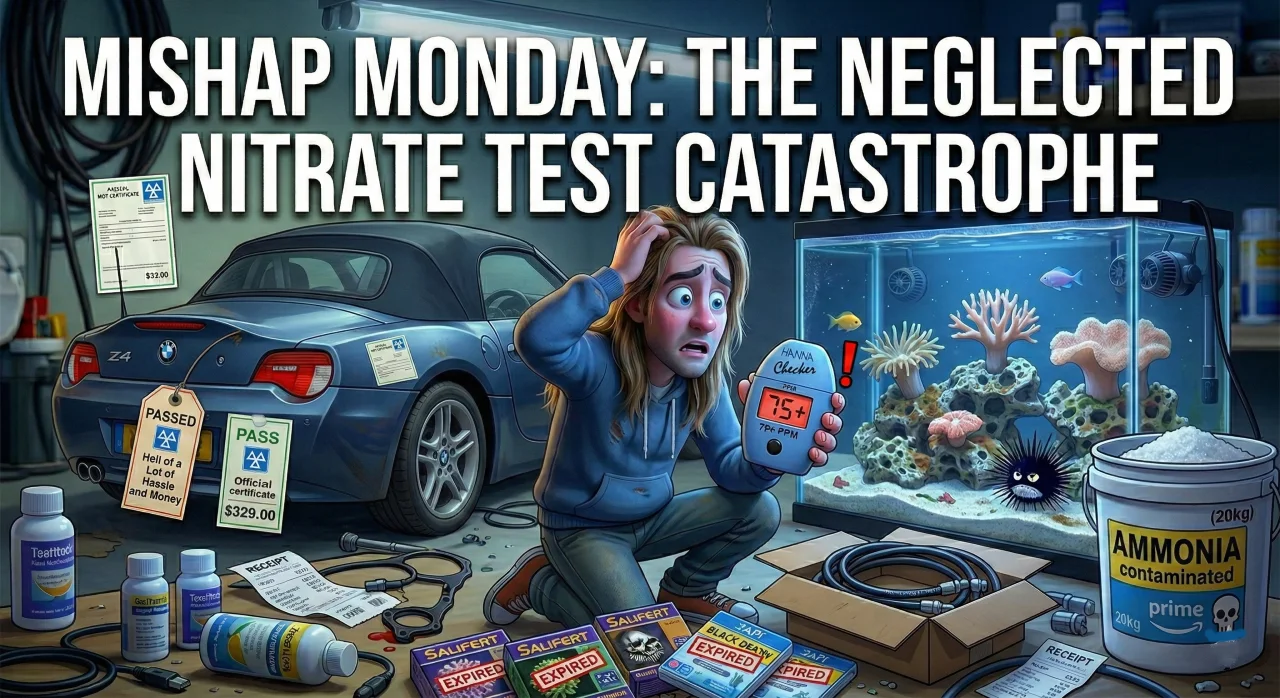
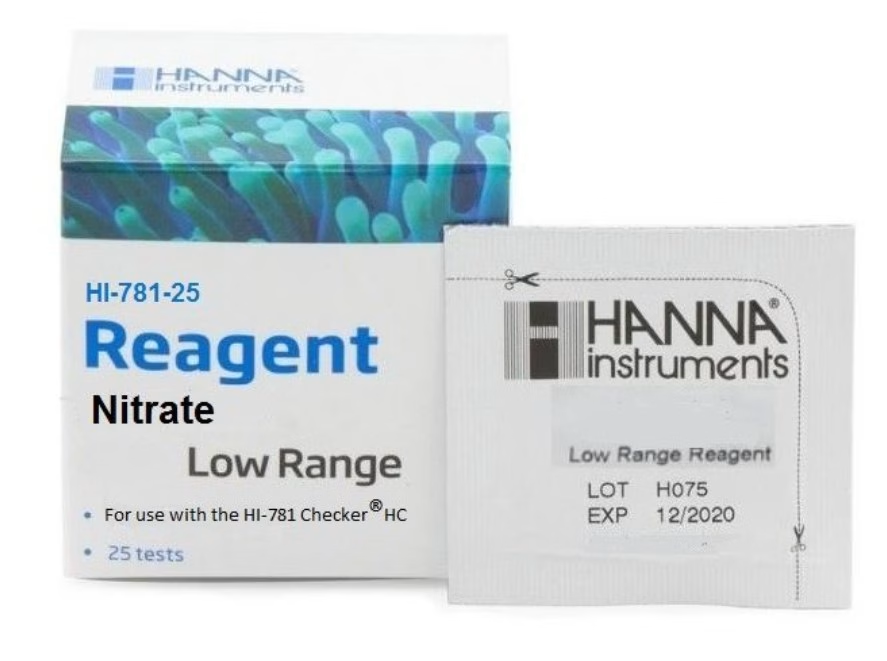
This incident dates back to a series of unfortunate events that occurred a few years back. So let’s establish the scene a little. I am low on nitrate test kits; my Salifert test had expired, my API test kit was convinced that my aquarium had scabies or the black death so was completely useless, and I was all out of reagents for my Hanna Nitrate checker. Not good but, even worse, I was pretty short on money.
I am a fairly enthusiastic home mechanic. I am a particularly big fan of a certain old, 2 seater, BMW with a drop top roof and a cooling system made of tissue paper. The big problem with old BMWs is that they absolutely love it when you spend money on them. It’s kind of “their thing”.
There was an MOT test coming up (this is a government mandated test in the UK where they, basically, check that your car is fit for the road) and I wanted our car to fly through with no issues. It’s a bit of a matter of pride for me. Sad, really, I suppose!
This meant that I needed to get to work. Some new brake lines needing forging, some new braided brake hoses needed purchasing, and those Xenon lights sure did have a lot of condensation in them. That wasn’t the only thing, though. We had another car with another MOT due that was needing a lot more work than the BMW.
It was all hands on deck at my mechanic’s shop under the nearest sheltering tree; money was tight as rope and so was time. New test kits were just going to have to wait and basic water changes were all I could fit in on my collection of aquariums. At least I had just purchased 20KG of salt so that I could keep on top of things, though. This is where things started to go wrong.
A Seemingly Simple Decision
I purchased some salt from a supplier who I thought was reputable. I had been using these guys for the entire time I had been running aquariums. Their salt was a bit more affordable than the rest but, more importantly, it delivered with Amazon Prime. This was important as we live in a remote location and most courier services don’t know that we exist. Convenience was key to me using this salt.
I mixed up the salt as I always would and went about my usual weekly water change routine. My last nitrate test on my main aquarium was in the 5-10PPM range, perfect! As long as nothing changes, we should be absolutely fine and nothing should go wrong.
Now, this was a 20KG bucket so you can imagine how many water changes that will do. I hadn’t made any changes to my routine, I wasn’t feeding more, my protein skimmers were all working, and nothing was dropping dead sporadically in the tank. Why should I need to spend my precious money on test kits?
After all, what’s the problem? I was doing what I had always done, nothing should change, the tank should be fine. That £10 can get me a fancy new oil filter housing gasket to stop that pesky oil leak. What a foolish decision. A little side note, here, that oil filter housing gasket didn’t last very long before it started leaking again. Don’t scrimp on gaskets, apparently.
An Unpredictable Catastrophe
Well, a few weeks go by and I am keeping up with my basic maintenance. The tanks are taking a bit of a back seat because I am so busy with everyday life and car stuff. I’m not really expecting anything to change and not predicting any issues. I mean, why should I be?
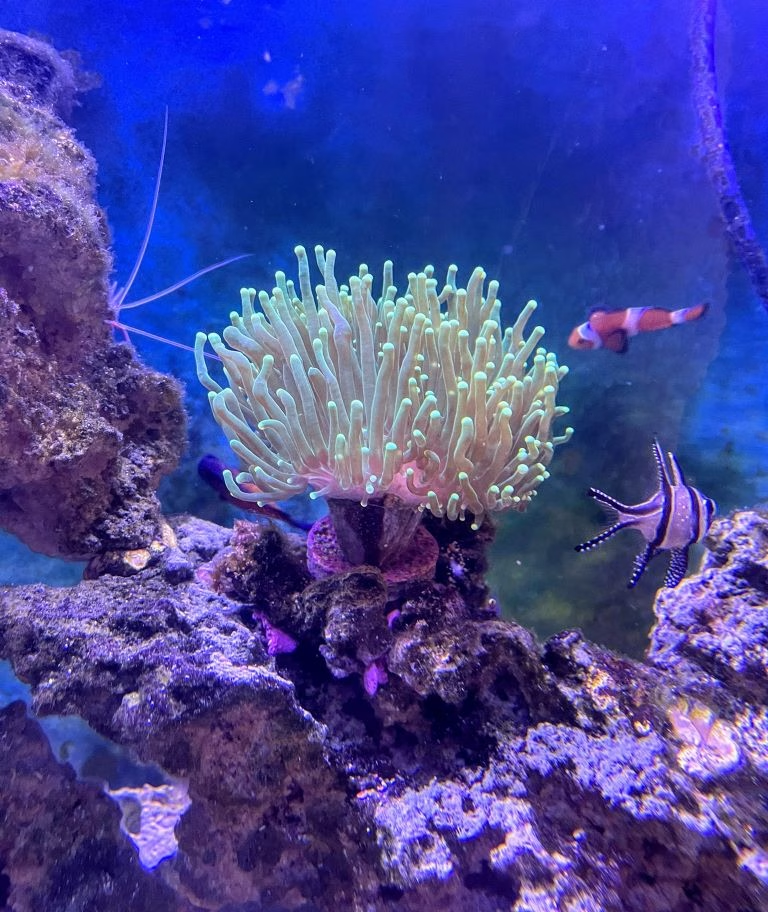
All of a sudden, I start noticing my coral looking a bit unhappy. Things are looking less bright, My torch is nowhere near as extended, and my Montipora and Bird’s Nest are heavily protesting… something, though I am not sure what it is. It all seems a bit strange.
I don’t think too much of it, perhaps it is a temporary spike in nitrates so I just bump up the water changes. That solves everything, right? A few weeks later, the problem was persisting. In fact, it was getting worse.
My torch had developed a severe case of agoraphobia and wouldn’t come out and now my soft coral was starting to look a bit upset too. When a toadstool is deciding that spending the majority of its time looking like a completely smooth flesh umbrella with no polyp extension is preferrable to dominating the landscape, you know something is wrong.
A Shocking Revelation!
I pushed my stubbornness aside and bought some new reagent for my Hanna test kits. What do you know, my nitrates were off the charts! That means they were over 75PPM! My aquarium had gone from below 10PPM to over 75PPM without a single change in my routine. If anything, I was changing water more often. What the hell had happened!?
I knew my source water was from a well maintained RO/DI filter and was completely pure so I was confused. In fact, I had only just replaced the filters with brand new ones. That couldn’t be the source of the issue. I checked it anyway but it was completely fine and free of nutrients.
All of a sudden, it dawned on me. The only thing different in my routine is that I had recently opened a new bucket of salt. Could that possibly be the cause of my problems? Well, I have always been careful to keep my water away from sources of ammonia. We don’t have a cat, or anything, either.
I decided to sterilise a bucket and mix up some saltwater using the salt I had been using for the past couple of months. Sure enough, when I tested it with a reliable ammonia test kit the water contained significant amounts of ammonia.
An Absolutely Crazy Reason!
Now we should clear something up, a small amount of ammonia in freshly mixed salt is normal. Ammonia can come as a biproduct of the manufacturing process of salt. Particularly where the salt is made using calcium chloride sources. That small amount of ammonia isn’t a problem at all. Your biological filter is going to deal with it almost immediately.
This wasn’t a small, trace, amount of ammonia – this was close to 1PPM. I was so shocked! I performed the test again and again using different containers for the water. It didn’t matter, the result was the same each and every time. There was significant levels of ammonia in this salt that I had only had for a month or two, was freshly opened, and stored in a sealed environment.
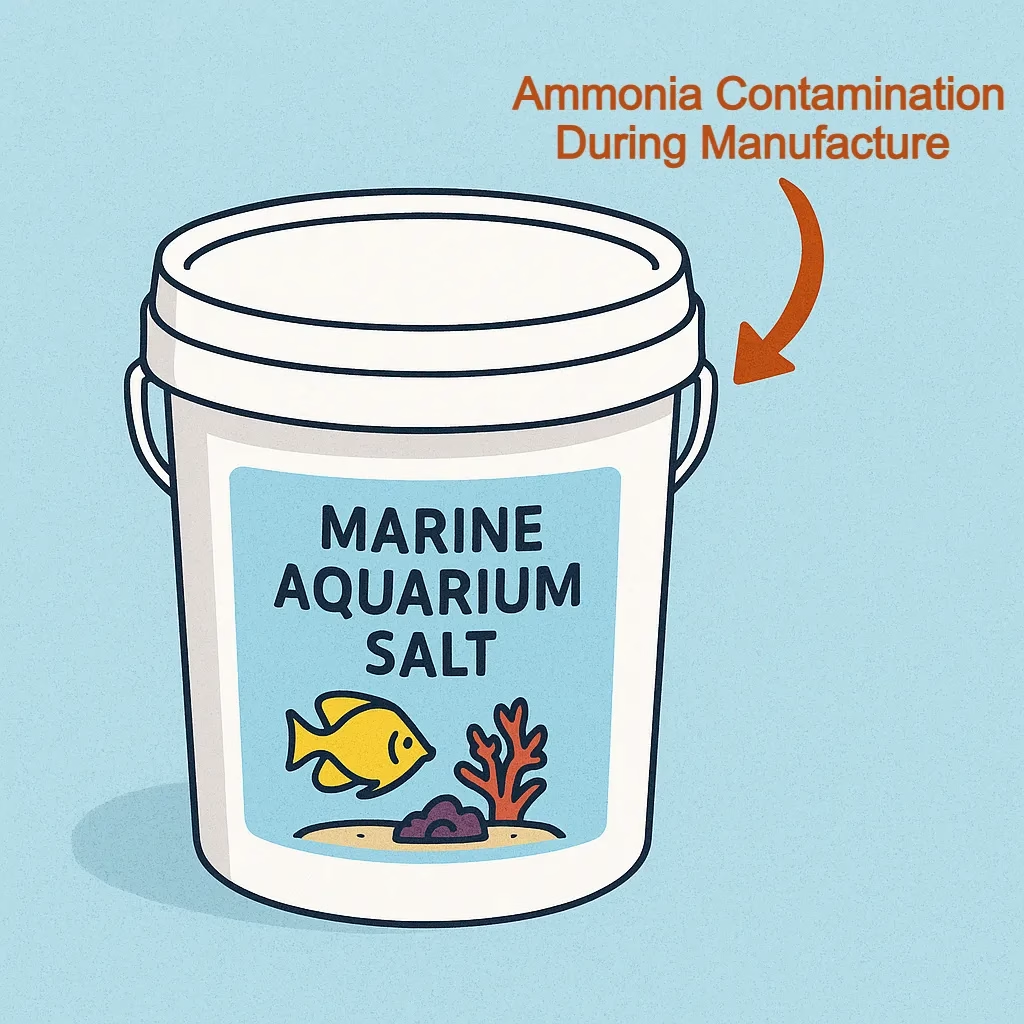
I rushed to read reviews of the salt and scoured online marine fishkeeping communities for answers. It turns out, this company had sold a number of batches of salt that were contaminated with ammonia. The reviews were crammed with constant mentions of the problem. People had wiped out entire tanks thanks to using contaminated salt.
In fact, the previous contaminated batch was only a few months prior to this and the most recent review was from only days before. I was pretty upset, as you can imagine. I contacted the company to, basically, warn them off this problem. I really didn’t want this to happen to anybody else.
They claimed that the batch I had purchased wasn’t part of the contaminated batch. At this point I was rather lost for words. I sent them a handful of different tests from different companies showing the results. They blamed Amazon’s storage, or supply, of the salt and sent me another 20KGs as an apology. Funnily enough, this new batch tested completely fine and free of ammonia. There wasn’t even the slightest detectable trace.
I Neglected Testing – So What Happened?
So how did this ammonia spike my nitrate levels? Well, naturally, the ammonia in the salt was being converted successfully by the bacteria in my aquarium. My biological filter was doing its job as my tank was mature. The only problem was, as we all should know, when Ammonia is converted to Nitrite, the Nitrite is then converted to Nitrate.

This was leading to a huge accumulation of nitrates as my tank processed all that excess ammonia. It was as if I was feeding my tank a few extra cubes of food per day. Only, I wasn’t. A salt manufacturer had simply messed up and now I had to clean up the mess.
This issue costs me hundreds of pounds to fix and a lot of effort. I purchased around 50KG of salt from a reputable brand and spent the next few weeks performing 10% water changes every day. I didn’t want to just do one massive change as I didn’t want to stress my residents out too much.
All of my marine aquariums were impacted by this issue. Nothing escaped unscathed and to say that it set me back massively would be a major understatement. The worst part of it all is that I wasn’t to blame for this issue… Or was I?
It Was Partly My Fault
I messed up big time, here, and my neglect meant that this problem became much worse than it needed to be. If I had just spent that money on new test kits or reagents for my Hanna checker, I could have kept up my usual testing routine.
I chart my test results and can measure what is typical and what is unusual. I would have spotted this issue starting well before it became a problem. As soon as the nitrates had increased more than expected I would have started searching for the problem.
I could have prevented it which would have saved me money and hassle. It wouldn’t have taken me weeks of performing water changes to correct it and I would have saved money on the numerous buckets of salt I purchased. That’s without mentioning the impact on my fish and coral. I now always have kits in and test routinely without fail, including my mixed water.
In Short
My reason for sharing this story with you is that you should be testing your water frequently. Even when you are following the best practices, things can still go wrong. There are lots of variables that are out of your control in marine aquarium fishkeeping.
If you haven’t done so, consider reading my articles on the importance of test kits to a marine aquarium and the importance of high quality test kits. They may just save you a hell of a lot of money and a hell of a lot of hassle when it comes to predicting and preventing problems. Thanks for reading and spending your time at Simple Reefs.