
Recovering from a Marine Aquarium Heater Failure – A Step-by-Step Guide to Tank Turnaround
Welcome to Simple Reefs. We are a brand new website designed to take the stress and expense out of starting your very own marine aquarium. One of the big topics that we have been looking at, as of late, is aquarium heaters. Today, we are talking about a bit of a harrowing subject – Recovering from a Marine Aquarium Heater Failure – A Step-by-Step Guide to Tank Turnaround.
Table of Contents
Recovering From a Marine Aquarium Heater Failure
Let’s be honest, it’s a scenario that every marine aquarist dreads. You glance at your tank’s thermometer and see a number far higher, or lower, than it should be. Your heart will drop, you will probably panic a fair bit, and then you will start assessing the damage.
A failed heater is one of the most common, and potentially devastating, equipment failures in the hobby. The rapid drop, or intense climb, in temperature can severely stress or kill fish, corals, and invertebrates. It’s, pretty much, the worst case scenario when it comes to your marine fishkeeping experience.
We talk all about the reasons why your heater might fail in this article. We also show you how to avoid a potential catastrophe right here. The truth is, however, a failed heater doesn’t have to be a tank ending situation. By acting quickly, calmly, and correctly, you can stabilise your system and being a journey back to health. Let’s take a look in our step-by-step guide to recovery.
Phase 1: Recognise and Asses The Damage (The First 30 Minutes)
So the worst case scenario has occurred. Your heater has failed and you have noticed. Hopefully, you aren’t staring at a tank full of bleached coral and a bunch of fish floating on their sides. We need to take a moment to recognise what the problem is and assess the damage.
1. Confirm Your Temperature and Unplug: First, verify the temperature of your aquarium with a reliable, secondary thermometer. Digital display thermometers can sometimes fail and false positives are a distinct possibility. If everything in your tank looks fine, this is potentially the problem. If the temperature is indeed too low or too high, locate the faulty heater and unplug it from the power source before putting your hands in the water.
This is an absolutely critical safety step. We want to avoid shocking ourselves so never put your hands in the water before unplugging the heater. Heaters can fail in ways that leave them open and leaking stray voltage. We definitely don’t want that. Stray voltage can even be present when your fish appear completely fine.

2. Assess the Situation: Note the current temperature of the tank water and the ambient temperature of the room. How much has it dropped or risen? A drop of a few degrees is serious, but a drop into the low teens Celsius (60s Fahrenheit) is a major emergency. A few degrees of increase is survivable but not ideal. Getting into the mid-80s and we may start to see some serious issues.
3. Time To Act But Take It Slowly: There are some concrete rules to the process of recovery and they apply regardless of whether your tank is too warm or too cold. We need to take things very slowly. We can’t rush, we can only attempt to mitigate the complications and correct gradually. Immediately increasing or decreasing the temperature can result in thermal shock which could be utterly disastrous. Don’t rush, stay calm, you’ve got this!
Phase 2: The Tank is Too Cold – Let’s Fix That (The 1 Hour Mark)
So this section assumes that your tank is too cold due to your heater failing. If the tank is too hot, carry on scrolling for the solution to that problem. Your immediate goal here is to stop any further heat loss and begin a slow, gradual, and controlled warming process.
1. Prevent More Heat Loss: Wrap the aquarium (including the sump, if you have one) in thick blankets, towels, polystyrene, or even cardboard. Hell, you can even go and grab your duvet off the bed if you like. This will insulate the tank and slow down any further cooling, buying you valuable time. Sure, it’s going to look a bit silly and you might make your blankets damp but we need to keep any remaining heat in the tank.

2. Begin a SLOW Warming Process: Please take note of the word “slow” there. The single most important rule here is to avoid rapid temperature swings. Raising the temperature too quickly is just as stressful as the initial drop, maybe even more so. Aim for a gradual increase of no more than 1∘C (2∘F) per hour. Please don’t stress and worry about your fish looking a little chilly. Fish are actually quite capable of tolerating gradual temperature drops. They go into a much reduced level of metabolism. You may notice them moving less but that is to be expected. Heating too quickly can shock them.
Here are several methods to safely warm the water:
- Best Case – The Backup Heater: The ideal solution is to have a pre-tested backup heater. This is an absolute marine aquarium ownership essential. You may even have one for heating salt water before water changes. Grab it and install it in a high flow area (like the sump or near a powerhead) and set it to your target temperature. If it’s a powerful heater, you may need to set it slightly lower, initially, and raise the desired temperature incrementally every hour.
- The Room Heater Method: If you are lacking a backup heater, turn up the thermostat in the room where the tank is located or bring a heater into the room and place it in the vicinity of the tank. This is a very safe and gradual method as it won’t heat the water too quickly, though it may be slow.
- The Hot Water Method: Fill clean, sealed containers (like plastic water bottles or Ziploc bags) with warm but not boiling tap water. Give the containers or bags a rinse with RO/DI water and float these containers in the sump or the main display tank. Replace them as they cool. This gives you manual control over the warming rate, it will warm the water very gradually, and should be safe due to the water being warm but not boiling.
3. Monitor The Tank: This is pretty simple. Keep an eye on the tank. Make sure your fish aren’t displaying any odd behaviour. As the tank’s water warms up, you should see them become more active, again. Keep your thermometer in the water and check the temperature even thirty minutes. If things seem to be warming too quickly, slow it down a bit.
Phase 2: The Tank is Too Hot – Let’s Fix That (The 1 Hour Mark)
This is often the more dangerous scenario. Marine aquarium heaters have a nasty tendency of failing in the “on” position. Thermostats break which leaves the heater thinking the water is too cold. This can also happen when a heater controller’s temperature probe comes out of the water. A “stuck on” heater will continuously heat the water, quickly raising the temperature to lethal levels.
Although it is very sad to discuss, if you have noticed any dead fish, you want to remove them immediately. We don’t need anything rotting or causing any more problems in the tank. Hopefully, you will have avoided this.
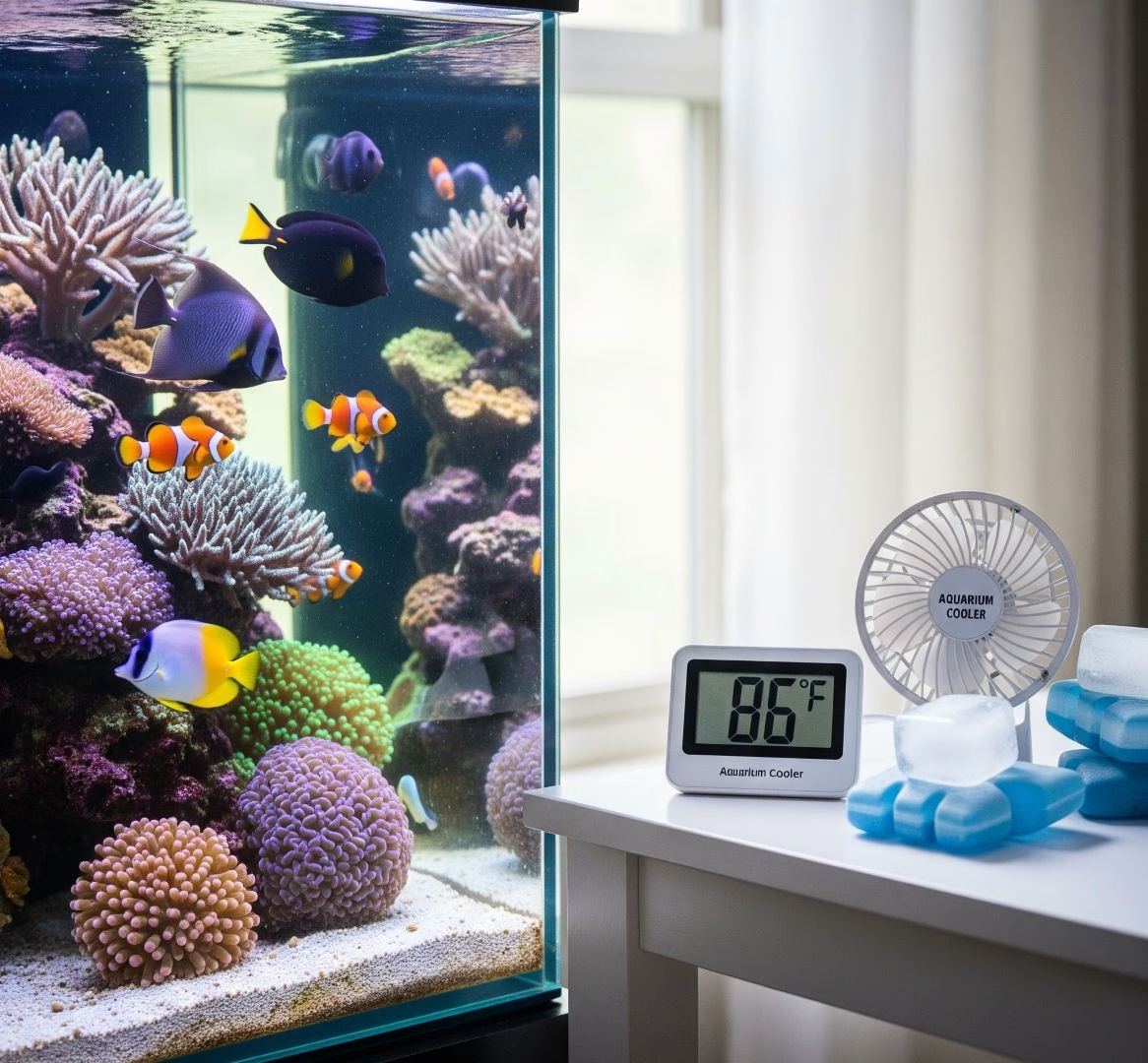
1. Create Evaporative Cooling: We need to cool the aquarium but, remember, we need to do it slowly. Don’t rush, don’t panic, we don’t want to shock the residents of our tank anymore than they already have been. Remove the aquarium lid or hood and aim a fan to blow across the water’s surface. This will accelerate the speed of evaporative cooling which is one of the most effective and gradual ways to lower the water’s temperature.
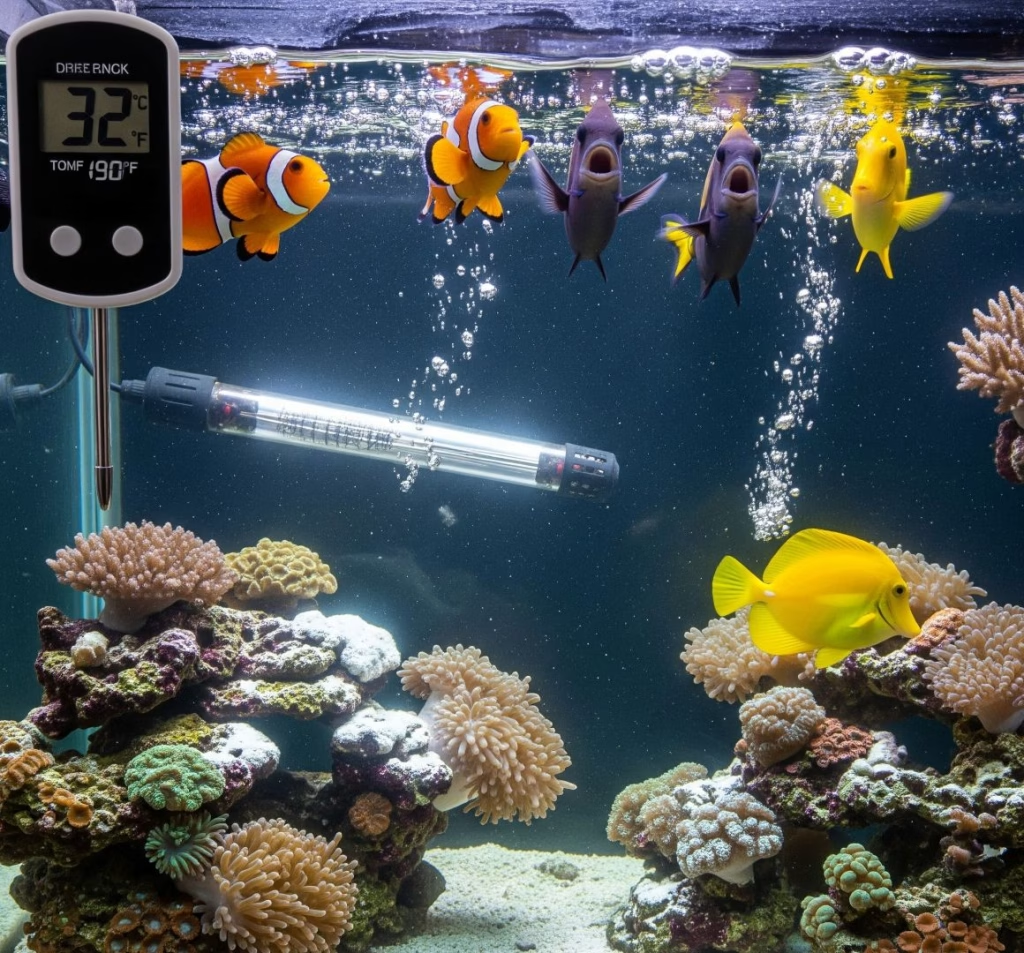
2. Increase Oxygen: Warm water holds significantly less dissolved oxygen than temperate water. We need to make sure the fish that are remaining won’t die of oxygen depravation. Add an air stone to the tank for easy oxygenation or point a powerhead towards the surface to create a nice rippling effect. You want it to look like waves on the surface. This will maximise gas exchange and help your gasping fish. Agitating the surface will also have the added benefit of increasing evaporative cooling.
3. Get Those Lights Turned Off: Turn off your main aquarium lights. High intensity lights, especially Metal Halides and T5s, generate a substantial amount of heat which we simply don’t need at the moment. Turn them off and turn off any UV filters, Algae Turf Scrubbers, or Refugiums as the light from those will heat the water, as well.
4. Begin SLOW Cooling: Just like with warming the tank when it is too cold, you must cool the tank slowly. A rapid drop will cause further shock so we need to take our time. Again, be patient, there is no benefit to rushing. Here’s a few effective ways to help the process along.
- Cool Water Bottles: Float sealed bags of cool water or small, sealed ice packs in the sump or a high flow area of the tank. Do not dump ice directly into the aquarium, it has to be in sealed containers. You may need to keep replacing the ice or water every 30 minutes as it will warm quickly.
- Small, Cool Water Changes: If the temperature is dangerously high (above 30∘C / 86∘F), you can perform a small (10%) water change with slightly cooler saltwater to help bring it down. Again, the small amount is to avoid shocking your tank’s residents.
5. Monitor The Tank: Again, this is pretty simple. Keep an eye on the tank. Make sure your fish aren’t displaying any odd behaviour. Check to see whether your fish have stopped gasping and remove any fish that don’t make it. Keep your thermometer in the water and check the temperature even thirty minutes. If things seem to be cooling too quickly, slow it down a bit.
Phase 3: The Tank is Too Cold – The Aftermath (The Next 24-72 Hours)
Once the temperature is stable and within the target range (typically 24−26∘C / 75−78∘F), the immediate crisis is over and, hopefully, you have come out of the other side with all of your fish still kicking and your coral in the process of recovery. Now, your focus has to shift towards more of an observation stage as you manage the secondary effects of stress.
1. Buy a New Heater: This one is obvious, right? It should be the first step of recovery. We need a new heater for our aquarium. Take a look at our guide on Which Type of Heater is Right for your Aquarium. Perhaps consider a heater combined with an external heater controller for extra protection.
2. Monitor for Disease: A sudden cold shock can severely compromise the immune systems of your fish. This can leave them vulnerable to parasitic infections, most commonly Marine Ich (Cryptocaryon irritans) and Marine Velvet (Amyloodinium ocellatum). You are going to have to keep an eye on this and be ready to react.
- Watch for: White spots resembling grains of salt, a gold or grey “dusting” on the body, rapid breathing, flashing (scratching against rocks), and lethargy.
- Action: If you see any signs, be prepared to begin treatment in a quarantine tank. Do not treat the display tank with copper based medications, as it will kill invertebrates and corals. You will need to have a separate tank ready and you may even want to get this set up as soon as you have fixed your cooling problem.

3. Observe Corals and Invertebrates: Corals will likely have retracted their polyps and may lose some colour. Give them stable conditions and time to recover, this might take awhile. Invertebrates like shrimp and snails may also be lethargic. Resist the urge to intervene unless they are clearly dead, in which case they should be removed to prevent an ammonia spike. You may be surprised at how resilient they can be. Your coral should start to return to their usual selves after a few days.
4. Check Your Biological Filter: The beneficial bacteria that process waste in your aquarium are less effective at colder temperatures. As the tank warms up, their activity will resume as normal, but the population may have been compromised and you may be a few bacterial soldiers down. Given time, they should recover but, in the meantime, keep an eye out.
- Action: Test for ammonia and nitrite for the next few days. If you detect any increased levels, perform a small water change and consider adding a bottled bacteria supplement to boost your biological filter.
5. Hold Off on Feeding: Do not feed your fish for at least 24 hours after the temperature has stabilised. Their metabolism will have slowed significantly and undigested food can cause internal problems as well as contributing to poor water quality. Reintroduce food slowly and in small amounts for the first few days following the crisis.
Phase 3: The Tank is Too Hot – The Aftermath (The Next 24-72 Hours)
Unfortunately, even after the temperature has returned to a stable, safe level, the danger isn’t over. There are still problems that can occur and you may encounter a few issues that you might not expect. Hopefully you didn’t loose too many fish and your coral is doing okay. Let’s take a look at the next steps.
1. Buy a New Heater: This one is, again, very obvious, right? It should be the first step of recovery. We need a new heater for our aquarium. Take a look at our guide on Which Type of Heater is Right for your Aquarium. Perhaps consider a heater combined with an external heater controller for extra protection.
2. Watch for Signs of Oxygen Deprivation: Look for fish that are still breathing heavily or hanging near the surface. Keep the extra surface agitation going for at least 24 hours. It won’t hurt to keep it going for up to 5 days if you want some extra peace of mind.
3. Assess Your Corals: High temperatures are a primary driver of coral bleaching. It’s why the world is experiencing a massive bleaching event right at this moment thanks to climate change. Your coral may lose colour and look pale or white. This is far more likely the more delicate the coral is. With stable conditions, they can often recover, but it can take weeks or months. Don’t rush to immediately whip a sad looking coral out of the tank. Just wait and see whether it can bounce back. Give it weeks if you have to.

4. Look for Bacterial Blooms: The excess heat can, believe it or not, sometimes cause a bacterial bloom, which will make the water look cloudy. This will usually resolve itself as conditions stabilise. If you notice cloudy water, again, keep your surface agitation up or keep the air stone in the water. Bacterial blooms lead to lower oxygen levels so you need to mitigate that.
5. Monitor for Disease: A sudden increase in temperature can cause massive amounts of stress to fish. This can compromise their immune systems more than you might think. A compromised immune system can leave them vulnerable to parasitic infections, most commonly Marine Ich (Cryptocaryon irritans) and Marine Velvet (Amyloodinium ocellatum). You are going to have to keep an eye on this and be ready to react.
- Watch for: White spots resembling grains of salt, a gold or grey “dusting” on the body, rapid breathing, flashing (scratching against rocks), and lethargy.
- Action: If you see any signs, be prepared to begin treatment in a quarantine tank. Do not treat the display tank with copper based medications, as it will kill invertebrates and corals. You will need to have a separate tank ready and you may even want to get this set up as soon as you have fixed your cooling problem.
Phase 4: An Ounce of Prevention is Worth a Pound of Cure
Once your tank is stable, it’s time to ensure this never happens again. Take a look at our article on how to avoid catastrophic heater failure in your marine aquarium and follow the tips, a few of which I will outline here.
- Build Redundancy: This is going to help with heaters failing on and off. Instead of one large heater, use two smaller ones. For example, use two 150-watt heaters instead of a single 300-watt unit. If one fails, the other can often maintain a survivable temperature, and if one gets stuck on, it won’t be capable of heating the all of the tank’s water so it’s less likely to dangerously overheat the tank.
- Invest in a Temperature Controller: This is the single best piece of insurance you can buy. An external temperature controller (from brands like Inkbird, DD, or Neptune Systems) acts as a fail safe. You plug your heater(s) into the controller and place its separate temperature probe into the tank. The controller, not the heater’s internal thermostat, manages the power. This protects you from both types of failure: a heater that won’t turn on, and one that won’t turn off. These temperature controllers often have alarms to alert you of problems. Some will even text your phone.
- Schedule Replacements: Aquarium heaters are not built to last forever. The thermostats and seals wear out. Proactively replace your heaters every 2-3 years for glass and every 3-5 years for titanium, regardless of whether they appear to be working.
- Keep Your Heaters Clean: Cleaning your heaters will give you chance to inspect them for damage, possibly preventing the worst case scenario. Cleaning them also helps prevent damage and keeps them working efficiently. Follow our handy heater cleaning guide right here.
- Keep an Emergency Kit: Have a spare, tested heater and a few blankets stored near your tank. In an emergency, you won’t have to scramble for supplies. It can also be handy to keep a specific aquarium cooling fan to hand and a few sealable containers that you can use to help cool or warm your tank in a crisis.
In Short
By following these steps, you can turn a potential disaster into a manageable incident and a valuable learning experience in responsible marine aquarium keeping. Heater failure doesn’t have to be a complete disaster. It can be something you recover from and never happens again. Thanks for reading and spending your time with Simple Reefs.