

Stalled Cycle – Organic Die Off On Rocks or Sand Causing a Stalled Cycle?
Welcome to Simple Reefs. This is a brand new website dedicated to taking the complexity out of Marine Aquarium Ownership. Our goal is to show you how you can own your very own slice of the ocean without spending a fortune. As well as giving you tons of easy to digest information on all things marine. We are still talking about stalled cycles and, today, we are looking at how organic die off can cause a stalled cycle in your marine aquarium.
Table of Contents
Stalled cycles are extremely frustrating when it comes to your first steps into the world of marine aquarium ownership. You keep testing for ammonia and the levels just won’t seem to drop. It’s enough to make you want to walk away from the hobby instantly. Especially when you just can’t get to the root of the problem.
Something you may have missed, however, is the role that organic die off on rocks and sand can play in the stalling of an aquarium cycle. Let’s take a look at why this problem can occur and then offer a solution to get you back on track.
The All Important Nitrogen Cycle
We talked about cycling a marine aquarium in our opening article on this subject and, by now, you are probably aware of what the process entails. As well as the importance of the nitrogen cycle (Wikipedia Article) to a healthy marine aquarium.
In essence, we are establishing a bacterial profile, in our tanks, that can process harmful compounds like ammonia. Without the presence of these nitrifying bacteria, ammonia would accumulate and poison our aquarium’s residents.

The way we do this is by adding ammonia to the tank water each day to feed a type of bacteria called Nitrosomonas. This Nitrosomonas bacteria will convert (oxidise) the ammonia into the less toxic compound nitrite.
When there is enough nitrite in the water, we will start to see the appearance of a new type of bacteria called Nitrobacter and Nitrospira. This Nitrobacter and Nitrospira bacteria will convert those nitrites into the far less harmful compound Nitrate which we can then remove from the water with water changes.
But what happens when those ammonia levels are stubbornly refusing to come down and you think that your cycle has stalled? Well, organic die off could be a potential cause. Especially if you started your aquarium with dry rock, live rock, or live sand.
We are assuming, here, that you are performing a fishless cycle and no drastic measures will need to be taken to prevent harm coming to the fish. This article acts as a bit of an expansion of our previous article on why your marine aquarium cycle has slowed down. With us focusing in, a little more, on the subject of organic die off. There may be some cross over so I apologise for that. First, however, I want to talk about one thing before we begin.
Identifying A Bad Ammonia Test Kit

The first thing I would suggest, when you are experiencing stubborn ammonia levels, is to check your ammonia test kit. Believe it, or not, a dodgy test kit can leave you chasing numbers that you will never see. This is such a common problem, in fact, that you read about it all the time. When it comes to the UK marine aquarium hobby, I think there is a solid explanation for that. The API Saltwater Master Test Kit.
This has to be the most common starter test kit for marine aquarium setups. It costs around £27 and contains an ammonia test kit, a nitrate test kit, a nitrite test kit, and a PH test kit. Great, right? That is pretty much full coverage when it comes to starting a new aquarium. The problem is, however, API Test Kits are difficult to, actually, get accurate results from.
I have written all about it in an article that is coming up in just a few days so check that article out for more information. As well as some examples of my own experiences including some real time positive ammonia test results on a well cycled marine aquarium.
To help avoid this issue, you need to identify whether, or not, you have a bad ammonia test kit. To do this, first, make sure the test kit is in date. I know, it sounds stupid but I have purchased test kits from online retailers that have arrived already expired.
The next step is to check reviews for your test kit; see whether people believe them to be accurate. Test some bottled water, or deionised water, to confirm that the test is giving you a negative ammonia reading. If it is, mix up a fresh glass full of saltwater and test that to confirm a negative result. If you know your test is accurate and you know it is in date, we can move onto the next suggestion.
Understanding How Organic Die Off Can Elevate Ammonia

Obviously, this entire article doesn’t apply to anyone who doesn’t have rocks or sand in their aquarium. In fact, if you fall into that category and you are experiencing stubborn ammonia levels. You may have a completely different problem all together that we will be talking about soon. When it comes to those of us who start with rocks or sand, however.
Organic die off is a potential issue when it comes to cycling an aquarium and it can be an easy beginner mistake to make. Organic die off is when dead organic matter on the surface of rocks, or in the sand, begins to to rot in your water producing ammonia.
Organic matter comes in all kinds of different forms. In the case of marine aquarium rocks and sand, it will mostly be comprised of flora and fauna that used to live on the rocks (e.g. dead algae, sponges, small invertebrates, bacteria) when they were in water.
Tiny microorganisms like bacteria, larger invertebrates like tube worms, decaying molluscs, dead plant matter like algae, and larger organics like sponges and, even, coral. When these things begin to rot, they produce the toxic compound ammonia.
- Did you start your marine aquarium with live rock?
- Did you start your marine aquarium with dry rock?
- Did you start your marine aquarium with live sand?
If we can answer “yes” to any of these questions. We may be getting close to the source of our problem. If you started with dry or live rock, did you cure the rock before adding it to your tank? If you don’t know what curing rock is, you can check the links below to have a closer look.
It, basically, means placing the rocks into a bucket of water with a heater and a wavemaker or power head for a number of weeks. Thus, allowing the decaying organic matter on the rocks to rot in the water rather than in your aquarium. In turn, making the rocks safe to add to your display.
If you didn’t cure your rocks, there may be some significant organic die off that is causing the levels of ammonia in your aquarium to climb. This can happen with the organics present in live sand, as well.
Understanding The Importance Of Curing Rocks
The curing of live rock is less essential when starting a new aquarium. In fact, the organic die off from a small amount of live rock could help your cycling process out in a big way. You already have established bacterial colonies on the live rock which can process the ammonia from the die off. You even have the bacteria, Nitrobacter and Nitrospira, to process the nitrites, as well. It’s just a case of waiting for it to spread.

The problem comes when you start with dry rock and don’t cure it. Aside from rock mined from terrestrial quarries and speciality rocks like Reef Saver and Life Rock that don’t need any curing and are ready to go. Other types of dry rock, like rock that was formerly in the ocean or removed from an aquarium and has been since dried. Will, likely, have a decent amount of dead organic matter hidden in the nooks and crannies and will need to be cured.
Each piece of LifeRock™ has multiple engineered aragonite coatings that not only maintain the extensive macro-and micro- porosity but yield the soft muted colors of a living reef. LifeRock™ is a superior rock of true marine origin without hitchhikers, organics, or algae. No curing is required. With LifeRock™ you will get the look of an established reef from Day 1.
A lot of Dry rock arrives looking fairly pristine. It is very easy to think that you don’t need to clean it and cure it. The truth is, however, there can be a lot of dead matter on those dry rocks. Old sponges, invertebrates, algae and the like. This dead matter is going to rot when you add it to warm saltwater. This rotting will then cause high levels of ammonia.
How High Levels of Ammonia Can Stall Your Cycle
High levels of ammonia are the biggest cause of a stalled marine aquarium cycle. The excess of ammonia will inhibit the growth, and reproduction, of the nitrifying bacteria that we are working so hard to introduce into our aquarium. The bacteria will have to work much harder to reduce the high levels of ammonia present in the water and this will impact its ability to reproduce (split).

If you are adding ammonia to your aquarium, as well, to help the cycle along. The minimal amounts of bacteria will be quickly overwhelmed. Meaning your ammonia levels will spike and stay consistently high until your bacteria is capable of processing all of that excess of ammonia. Depending on how dirty your rocks are, this could take a long time.
The Solution To Organic Die Off?
If this is the case, the easiest thing we can do is to wait. Because waiting will allow our nitrifying bacteria to do its job of processing the high levels of ammonia gradually. Taking the rock out and curing it now would be a bit of a waste of time.
The rock is, essentially, in the process of curing inside of your aquarium and will, in theory, be cycling at the same time. It just means that your cycle is going to take a bit longer while the dead stuff on the rocks rots. If we really want to get proactive, let’s put forward a plan of action to tackle this issue.
- Check that your ammonia test kit is reliable
- Stop adding ammonia via food, shrimp, or ammonium chloride
- Scrub your rocks in the aquarium to remove any visible dead organic matter
- Perform a 25%-50% water change to reduce ammonia levels in the water
- Add a bottle of nitrifying bacteria to give your cycle a helping hand
This list is pretty simple and should get your marine aquarium cycle back on track. First of all, as listed above, we are going to check that our ammonia test kit is reliable. Once that is confirmed, we are going to stop adding ammonia to the aquarium. That means no more ghost feeding, no more dosing ammonium chloride, and no more frozen shrimp.

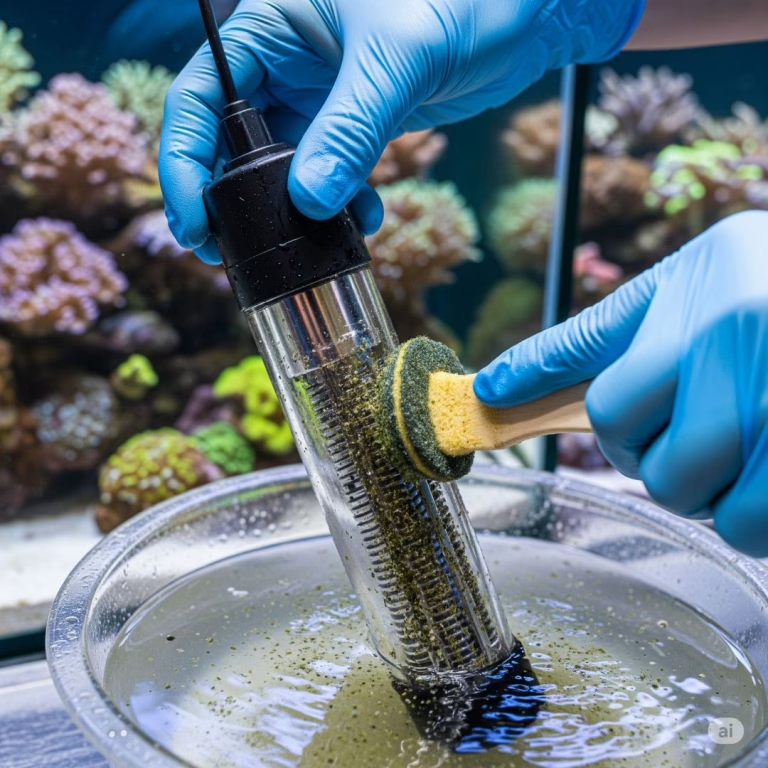
The next step is to give those rocks a scrub, in the aquarium, with a medium bristled brush. You can’t remove all of the dead organic matter but you can remove what you can see. Keep your filter on while you do this to trap the debris.
Give Your Aquarium’s Bacteria a Helping Hand
We then want to perform a decent sized water change to drop those ammonia levels right down and help out our nitrifying bacteria. As much as you can reasonably manage. We are then going to to give our bacteria a helping hand by adding a bottle of nitrifying bacteria.
A bottle of nitrifying bacteria will come with all the bacteria you need to get the nitrogen cycle going again. We have Nitrosomonas bacteria to process ammonia and we have Nitrobacter and Nitrospira bacteria to process nitrite, as well.
This can be an almost instant solution to organic die off slowing your cycle. A little added every day will help you stay on top of things. Follow the instructions carefully. We don’t want to add too much at once as this can cause a bacterial bloom which will rob the tank of oxygen and slow things down.
How Long Will This Take?
This question really depends on how much organic die off there was on the rocks. The die off in the aquarium will need to be processed by the Nitrosomonas bacteria and it is tough to know how much die off there is. It will take as long as it takes, unfortunately, so patience is an absolute must.
Keep testing for ammonia each day and, after a few weeks, the levels should begin to drop. Remember, your cycle hasn’t stalled. It has just slowed down a bit while it deals with all of that ammonia from the die off. Once the levels drop, continue testing until they get to zero and then resume the cycling process as normal.
How Can I Prevent a Stalled Cycle from Organic Die Off?
The only way to prevent a stalled cycle from organic die off is to cure your dry rock, rinse your sand before adding to your aquarium, or by purchasing speciality rocks, like Life Rock and Reef Saver rock, that are ready to use without curing. If you really don’t want to cure your dry rock, my suggestion would be to keep adding bottled nitrifying bacteria throughout the entire process of cycling your aquarium.
This way, you will be giving the bacteria in your aquarium a constant boost. Enabling it to do its job more efficiently. Bottled bacteria is a relatively affordable way to really kick start your cycling process and it also has the peripheral benefit of vastly increasing the bacterial diversity present in your aquarium. In large part thanks to the different bacteria included in your average bottle of nitrifying bacteria. Thank you very much for reading and spending your time with me here on Simple Reefs.