
How to Turn Dry Rock and Dry Sand Into Live Rock and Live Sand (Fishless Guide)
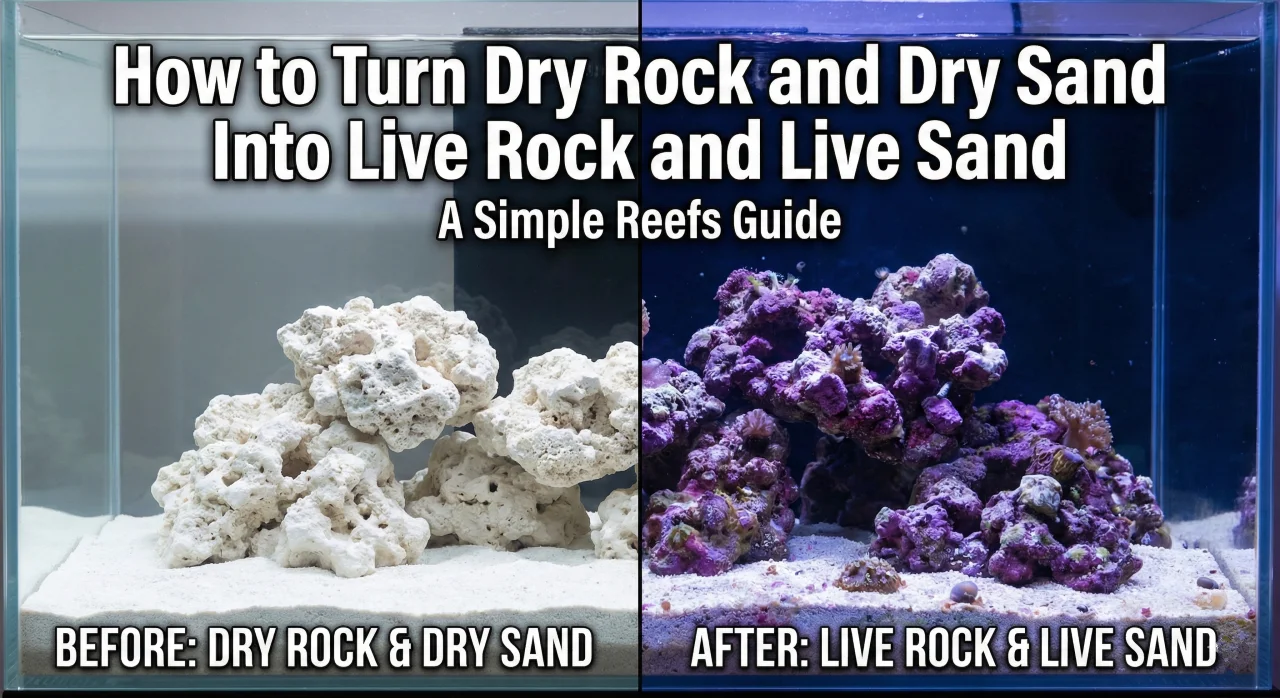
Welcome to Simple Reefs. If you are reading this, you have likely already decided to save yourself a small fortune by building your aquascape with cheap, pest-free Dry Rock rather than expensive ocean live rock. In this article, we are going to show you How to Turn Dry Rock and Dry Sand Into Live Rock and Live Sand (Fishless Guide).
Table of Contents
Note: This is a strictly fishless cycling guide. Modern marine best practice avoids exposing fish to toxic ammonia during startup, so every method outlined here establishes your biological filter safely before any livestock is added.
Key Takeaways
- The Goal: You must introduce beneficial nitrifying bacteria to your sterile dry rock so it can process toxic fish waste (ammonia).
- Three Ways to Seed: You can introduce this bacteria using a small piece of established Live Rock, a bottle of liquid marine bacteria, or a bag of Live Sand.
- The Golden Rule: Bacteria is a living organism. Whichever method you choose, you must feed the bacteria an ammonia source to force it to multiply and spread across your dry rock, surfaces, and sand.
This article answers the ultimate question – “How do I build a stunning rockscape without emptying my wallet?” The methods detailed here are the holy grail of budget reefing. We break down exactly how to bypass insane fish store markups, avoid introducing nightmare pests, and transform cheap, sterile stone into a thriving biological filter. This method also works perfectly for turning dry sand into live sand.
Make Your Own Live Rock and Save Money
Let’s be honest, one of the things that attracts many new hobbyists into marine fish keeping is those stunning aquascapes you see online.

Gorgeous displays of rock and coral that look like they have been taken right out of the reef itself. I know that was one of the main reasons I set up my first tank.
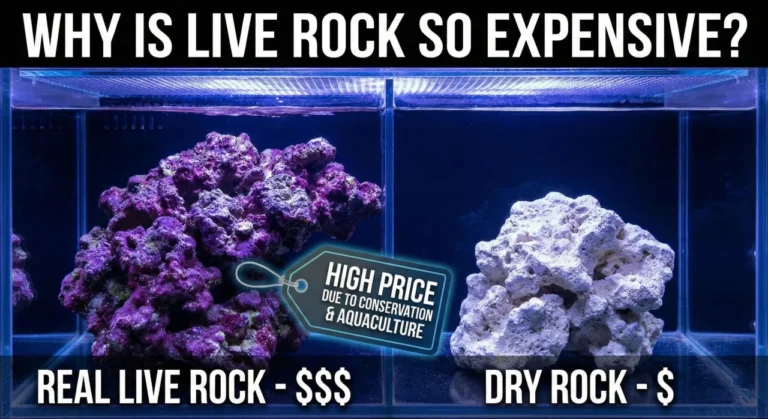
The problem is, that rockscape doesn’t come cheap. Live rock prices have jumped massively in recent years; you can easily pay £20-30 per kilo. We talked extensively about the reasons why in our article on the cost of live rock and why it is so expensive.
The solution? Let’s skip the fish shop’s high prices and make our own live rock using dry rock. That’s what we are going to do today. All we need to start is dry rock. Dry rock is much more affordable, costing as low as £2 per kilo. For real porous dry rock you should expect to pay between £4-8 per kilo.
💡 Good News: This Seeds Your Sand, Too!
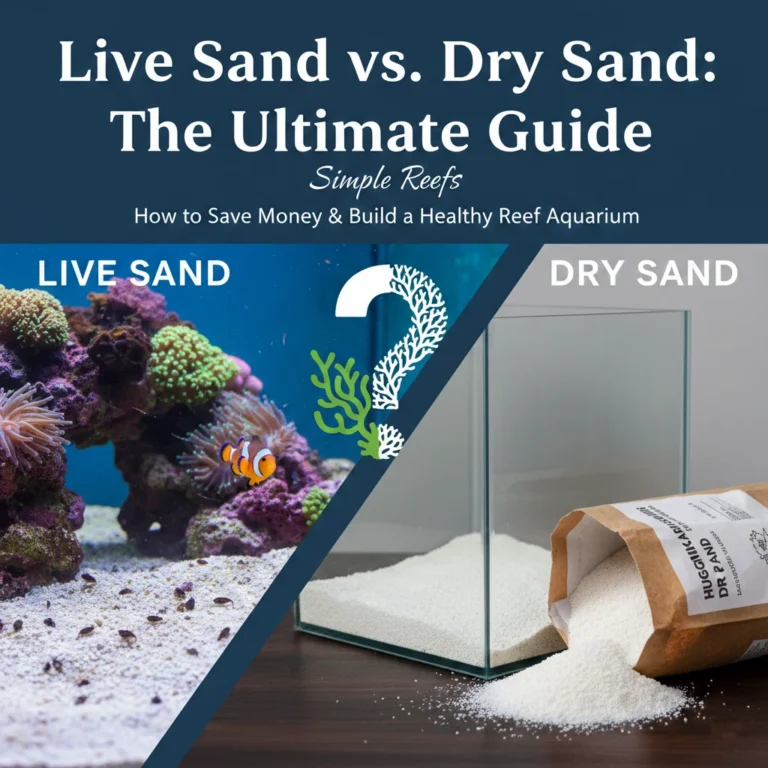
If you decided to save money by purchasing cheap, dry aragonite sand instead of premium “Live Sand”, you are in luck. You do not need a separate process to make your sand bed live.
The exact same bacteria and ammonia dosing methods you use to seed your dry rock will simultaneously seed your sand. As the bacteria multiplies and spreads, it will naturally populate both the porous structure of your rocks and the millions of tiny sand grains across the bottom of your tank at the exact same time.
We Need to Seed The Dry Rock
Dry rock is a sterile, barren canvas with no bacteria at all. To make it function as the biological filter your marine aquarium desperately needs, you have to introduce life to it – a process known in the hobby as “seeding”.
Today, we are breaking down the three best ways to turn dry rock into live rock, and exactly how to feed that new life to establish a strong, safe ecosystem. We have three choices of “seed” that we can use with this process.
Each has their own advantage or disadvantage. Again, this process is identical for turning dry sand into live sand. Let’s take a look.
⚠️ Warning: Does Your Dry Rock Need “Curing”?
Not all dry rock is created equal. If you bought pure, mined aragonite rock (like Marco Rock), it is completely clean and ready to go. However, if you bought dry rock that was pulled from the ocean and left in the sun to dry, it is likely packed with dead sponges, algae, and worms deep inside its crevices.
A tiny amount of this dead organic matter is actually helpful, as its rotting provides the ammonia needed to start your cycle. But if there is too much dead matter, the resulting ammonia spike will be so massive that it will completely overwhelm the bacteria and stall your cycle for months (a painful lesson many reefers learn the hard way, including me which you can read all about here!).
The Fix: Smell your dry rock. If it smells foul, or if it is visibly covered in brown/black dried gunk, you need to cure it first. Place it in a dark bucket of heated saltwater with a powerhead for a few weeks, doing 100% water changes whenever the water gets murky, until the rock stops leaching ammonia. Then, it is ready to be seeded in your display tank. We have an entire series of articles covering the dry rock curing process.
Some dry rock can leach phosphate during the first few months. If nuisance algae appears later, this is normal and manageable with water changes or phosphate absorbing media like ROWAPhos.
Method A: Using Established Live Rock (The Traditional Biodiverse Route)
This is the most traditional method. You take your tank full of blindingly white dry rock and introduce one single, highly mature piece of real Live Rock from a trusted local fish store or a fellow hobbyist’s tank.

This piece of rock needs to have been in an established marine aquarium for at least six months to guarantee a decent level of biodiversity. Take a look at our handy guide on how to pick a great piece of live rock.
Because this seed rock is already covered in bacteria, coralline algae spores, and microfauna (like copepods and mini feather dusters), those organisms will naturally migrate and multiply across your dry rock over time.
💡 Tip: The “Sump Rubble” Hack
You don’t need a massive display piece to do this. Ask a local reefer for a handful of “rubble” (small broken pieces of rock) from their sump. It is usually incredibly cheap (or free) and absolutely teeming with the exact biodiversity your dry rock needs.
The Catch: This method carries the risk of introducing unwanted hitchhikers, like Aiptasia anemones or other unwanted pests. Also, if you order live rock online and it is shipped to you overnight, you may need to cure it in a bucket first to prevent massive ammonia spikes from transport die-off. If you are unsure whether you need to cure your live rock, check our article right here.
⏳Expected Timeline: 1 to 4 weeks. This varies wildly depending on how mature the seed rock is, and how much organic “die-off” occurs during transport. A piece of fully cured rubble from a local buddy might cycle the tank in a week, while shipped rock might take a month.
Method B: Using Bottled Bacteria (The Safest Route)

In many ways, this is the safest and most optimal way to turn dry rock into live rock because it completely removes the risk of introducing unwanted pests. You simply purchase a bottle of concentrated, dormant nitrifying bacteria designed specifically for starting marine aquariums.
Brands like Dr. Tim’s One & Only or Brightwell MicroBacter Start are fantastic, reliable options. You simply shake the bottle and pour it directly into your water according to the instructions. The bacteria wakes up, looks for surfaces to cling to, and begins populating your dry rock and sand.
The Catch: While 100% pest-free, it only introduces bacteria. It will not introduce beneficial micro-crustaceans or purple coralline algae. You will have to introduce those separately later on.
⏳ Expected Timeline: 2 to 4 weeks. This is highly consistent. Because you are dumping millions of active, concentrated spores directly into the water column, they attach to the dry rock very quickly. As long as you feed them daily, you will see a rapid cycle. Be very sceptical of claims of instant cycling, though. Take your time.
Method C: Using Live Sand (The 2-in-1 Route)
If you are planning on having a sand bed in your marine aquarium anyway, you can use “Live Sand” to seed your dry rock. Live sand (like CaribSea Arag-Alive) comes wet in a bag and is pre-infused with millions of nitrifying bacteria. Once placed in the tank, that bacteria will spread upward onto your dry rock structure.
The Catch: Live sand is a premium product. A bag of live sand can cost double the price of basic dry sand. Many reefers (myself included) find it much more cost-effective to buy cheap dry sand and use a £15 bottle of bacteria (Method B) to seed both the rock and the sand simultaneously.
⏳Expected Timeline: 3 to 6 weeks. This is the slowest of the three methods. The bacteria is isolated to the bottom of the tank, meaning it takes much longer for it to multiply, migrate upwards, and fully populate your dry rock structure.
💡 Tip: The Live Sand “Hybrid” Hack
Just like with live rock, you do not need to fill your entire aquarium with expensive live sand. If you have a medium-to-large tank that requires 40lbs of sand, buying premium live sand for the whole thing will cost a small fortune!
Instead, use the Hybrid Method: Buy 90% cheap, thoroughly rinsed dry aragonite sand to build the base of your sand bed. Then, pour just one single bag of premium Live Sand evenly over the top. The millions of bacteria in that top layer will quickly migrate downward, seeding the rest of your dry sand and saving you a ton of money in the process.
Quick Method Comparison Table
| Cycling Method | Speed | Control & Precision | Smell & Mess | Beginner Friendly? | Verdict |
|---|---|---|---|---|---|
| 🧪 Liquid Ammonia (Dr. Tim’s) | 2 to 4 weeks | High (Exact daily dosing) | Zero smell, zero mess | Yes | ⭐ Best Overall |
| 🐟 Ghost Feeding (Flakes) | 3 to 5 weeks | Medium (Hard to measure exact ammonia) | Low smell, mild filter muck | Yes | ✅ Good Budget Option |
| 🦐 Raw Frozen Shrimp | 4 to 6 weeks | Low (High risk of massive ammonia spikes) | Foul smell, heavy filter sludge | Acceptable | ⏳ Old-School Method |
| ☠️ Fish-In Cycle | Varies | None | High risk of dead fish | No | ❌ Never Recommended |
Step 1: Choose Your “Seed” and Set Up The Tank
Before you begin, ensure your aquarium is set up, filled with saltwater, up to temperature, and your powerheads/filters are running. Strong water movement and oxygenation help bacteria multiply faster so get those powerheads pointed at the surface to agitate it nicely.
We DON’T want any protein skimmers or UV Sterilisers running at this point. Just stick to basic filtration. During cycling, you want organics to remain in the water to break down into ammonia. Skimming too aggressively can reduce that food source and skimmers.
Keep your aquarium lights OFF during this entire process to prevent nuisance algae from taking over before the bacteria has a chance to settle.
⚠️ Warning: The “Blank Slate” Algae Trap
Because your new dry rock is completely barren, it is basically a blank canvas with zero biological competition. If you run your expensive reef lights while your tank is cycling, nasty nuisance algae (like brown diatoms or green hair algae) will rapidly take over your pristine white rocks before beneficial bacteria even has a chance to settle.
The Fix: Keep your aquarium lights completely off during the entire cycling and seeding process! The nitrifying bacteria does not need light to grow and multiply. Save the electricity and only turn your lights on once your cycle is finished and you are ready to add your first cleanup crew or fish.
Now, choose one of the three methods we listed above to introduce bacteria into your tank. Each has slightly different methods of application:
- Live Rock or Live Rubble: Just place it in the aquarium, touching the dry rock in your tank. Rubble can be placed out of sight at the back.
- Bottled Bacteria: Turn off your powerheads and filter, add the bacteria to the tank as per the instructions on the bottle, give it 30 minutes and then turn your filters and powerheads back on. We need to give the bacteria time to settle on the surfaces of your rocks.
- Live Sand: Turn off your powerheads and filters and drop the sand into your aquarium, over your existing dry sand or over the bottom of your tank. When the cloudiness clears up, you can turn the powerheads and filters back on.
⚠️ Warning: Rock Before Sand (Avoid the Avalanche!)
You must always build your aquascape before adding your sand. Your heavy rocks should sit securely on the bottom bare glass of the tank, never on top of the sand bed.
If you build your reef on top of sand, burrowing snails, fish, or shifting water currents will eventually undermine the foundation. This will inevitably cause a catastrophic rock slide that could crush your livestock or shatter the bottom of your aquarium!
The Right Way: Place your rocks firmly on the glass first, then pour the sand around the base of your structure to lock it in. Leave your powerheads and filters off until the initial cloudiness settles, and then you can safely smooth out the sand distribution.
Once the “seed” has been added, we can move onto the next step which involves feeding the bacteria.
Step 2: Feeding the Bacteria (The Cycle)
Regardless of which of the three methods you chose above, you are now at the most critical stage. You have introduced the bacteria to your tank… now you have to feed it.
If you don’t feed the bacteria, it will starve and die, leaving your dry rock completely dead. To get nice and fat and multiply across your sterile rocks, bacteria needs to eat Ammonia.

As you dose ammonia and the bacteria multiplies, it will colonise every available surface area in your aquarium, including your dry rock, your sand bed, and even your filter media.
Here are the three ways to provide that food source to kickstart your nitrogen cycle.
Option 1: Pure Liquid Ammonia (The Easy Way)
This is my absolute favorite method. Rather than waiting for things to rot, you feed the bacteria directly using aquarium-safe liquid ammonia. Dr. Tim’s Ammonium Chloride is the gold standard for this. You can purchase it from Amazon for very little money. It’s completely reef safe and contains no dyes or fragrances.
Note: Be very careful using household ammonia. Many have thickening agents, dyes, fragrances, and other additives that make them completely unusable for this task. You absolutely have to stick with pure ammonia, nothing else. If in any doubt, skip it and go with a product intended purely for aquariums.
It comes with a dropper and clear instructions. You simply count out the exact number of drops based on your tank’s volume and squirt it in. It is clean, precise, and ensures your bacteria has exactly what it needs to reproduce immediately without polluting your water with rotting organics.
💡 Tip: Don’t Starve Your Bacteria (Daily Dosing)
A massive beginner mistake is adding liquid ammonia on day one and then just waiting for the cycle to finish. Bacteria are living organisms: if you do not provide a constant food source, they will starve, die off, and stall your cycle!
If you are using liquid ammonia (like Dr. Tim’s), you must add the specified dose to your tank every single day. Set a daily alarm on your phone so you don’t forget. You only stop dosing daily once your test kits prove the tank can process a full dose of ammonia completely down to 0ppm within 24 hours.
Option 2: “Ghost Feeding” (The Classic Way)

If you don’t want to buy liquid ammonia, you can “ghost feed” the tank. This means pretending you have a fish, and dropping a small pinch of marine flake food or pellets into the empty tank every single day. This is a proper old fashioned way of getting the cycle going and still works fine.
As the uneaten food rots in the warm saltwater, it naturally breaks down and releases ammonia, feeding your newly introduced bacteria. It works perfectly, though it can make your mechanical filters a bit dirty.
Option 3: The Raw Shrimp (The Old-School Way)
This is how hobbyists did it twenty years ago and plenty of people still swear by it to this day. You go to the supermarket, buy a single raw, frozen shrimp (the kind you’d put in a curry), defrost it, and throw it straight into your tank.
As it rots over the next week, it produces a massive, continuous spike of ammonia to feed your bacteria. It is highly effective and completely hands-off, but it is also pretty gross and can make your living room smell a bit funky for a few days.
⚠️ Warning: The Messy Reality of Rotting Shrimp
While the raw shrimp method is cheap and hands-off, there is a catch: rotting seafood creates a massive amount of physical muck. As the shrimp breaks down, chunks of organic matter will inevitably get sucked into your overflow and quickly clog your mechanical filters.
The Fix: If you use this method, you must regularly check and rinse your filter socks, sponges, or filter floss every few days. If you leave that rotting sludge trapped in your filters for weeks, it will restrict your water flow and cause a massive spike in nitrates. Just remember to only rinse your mechanical filtration – leave your bio-media (like ceramic rings) completely alone so the new bacteria can grow undisturbed!
Step 3: Test and Wait
Once you have seeded your rock and started feeding the bacteria ammonia, it becomes a waiting game. Do not add fish yet! An ammonia spike will cause a slow, painful death for any livestock.
We need to start testing our aquarium’s water for Ammonia. Grab a reliable Ammonia and Nitrate test kit (like Salifert) and test your water every few days.

We are aiming for our aquarium to be able to process a certain amount of ammonia in 24 hours. When it can do that, we know it will be able to process the waste that comes from one or two fish.
- The Spike: First, you will see your ammonia levels rise. This is a good thing; it means the food/ammonia source is working and that your bacteria have food.
- The Drop: As your bacteria multiplies and covers the dry rock, it will start eating the ammonia faster than you add it. You will see the ammonia reading drop down to absolutely zero.
- The Finish Line: Keep ghost feeding or adding liquid ammonia. Once your tank can clear an ammonia dose completely down to 0 ppm within 24 hours, and you show a positive reading for Nitrates, your cycle is complete! You may also see nitrite spike before nitrates appear. This is normal and part of the cycle. Luckily, Nitrites in numbers present during cycling are far less harmful to marine fish so we don’t need to worry about them as much as we do in freshwater. When you see nitrates and 0PPM ammonia in 24 hours, you are good to go.
⚠️ Warning: Has Your Cycle Stalled?
Sometimes, despite doing everything right, a marine cycle can hit a brick wall. If you reach week 4 or 5 and your ammonia levels are stubbornly refusing to drop to zero, your cycle has likely stalled. This often happens due to a sudden drop in pH, accidentally overdosing your ammonia source, or temperature swings.
The Fix: Don’t panic and don’t dump your water! We have put together an entire series on troubleshooting this exact issue. Head over to our comprehensive guide on Why Your Marine Cycle Has Stalled (And How to Fix It) to get your bacteria reproducing and your cycle moving again.
Congratulation On Your New Ecosystem
Cycling dry rock and sand is all about patience. We are aiming for stability and, to get there, you are building a biological engine that will quietly support everything you add later.
⚠️ Note: The Journey Has Just Begun
Once your cycle is complete, you can perform a 25% water change and safely add your first hardy fish or a clean-up crew! However, your dry rock is only “live” in terms of biological filtration. It will still take 6 to 12 months for it to truly mature, grow beautiful coralline algae, and establish a deep microfauna population. Be patient, take it slow, and welcome to the reefing hobby!
Seed it properly. Feed it consistently. Test with patience. Wait until ammonia can be processed reliably before adding life.
If you give the bacteria what they need at the start, they will carry your reef for years to come. The glass box becomes an ecosystem, and that transformation is where the real magic begins. Thanks for spending your time at Simple Reefs. 🪸
Frequently Asked Questions
Can I just put fish in right away to create the ammonia?
No! This is known as “fish-in cycling” and it is considered highly unethical in the modern marine hobby. Ammonia burns the gills of fish and causes immense stress and death. Always complete your cycle using a fishless method before adding livestock.
Do I leave the protein skimmer on while seeding the rock?
It is generally best to leave your protein skimmer OFF while seeding and cycling. Skimmers are designed to pull organic waste out of the water. During this process, you actually want that waste in the water to break down into ammonia to feed your new bacteria.
How long does the whole process take?
If you use high-quality bottled bacteria and liquid ammonia, you can establish enough bacteria on your dry rock to safely add your first fish in as little as 2 to 4 weeks. If you use the raw shrimp method, it may take 4 to 6 weeks.