

Live Rock vs Dry Rock vs Life Rock for Beginners Starting a Marine Aquarium
Welcome to Simple Reefs. Choosing between Live Rock, Dry Rock, and Life Rock is one of the most important decisions when starting a marine aquarium. Today, we are looking at the crucial role rock plays in a marine aquarium, whether or not you actually need it, and exploring the ultimate beginner debate: Live Rock vs. Dry Rock vs. Life Rock.
Table of Contents
Live Rock vs Dry Rock vs Life Rock – what’s the difference?
Live Rock contains real ocean bacteria and organisms and cycles a tank instantly but carries pest risk. Dry Rock is pest-free and affordable but requires cycling. Life Rock is artificial rock infused with dormant bacteria, offering a middle ground between safety and faster startup.
Key Takeaways
- Rock is your filter: In a marine tank, the rock isn’t just for decoration; it acts as the primary biological filter, housing the bacteria that keeps your fish alive.
- Live Rock is fast but risky: Real ocean rock cycles your tank instantly but carries a high risk of introducing devastating pests and parasites. It is also incredibly expensive.
- Dry Rock is the budget king: 100% pest-free and very affordable, but requires patience as it takes longer to mature and establish a stable ecosystem.
- Life Rock is the middle ground: Man-made and painted purple to look mature, infused with dormant bacteria. It is pest-free but comes at a premium price.
Quick Comparison: Live vs. Dry vs. Life Rock
If you are standing in your local fish store trying to decide what to buy, here is a rapid breakdown of the pros, cons, and costs associated with each type of reef rock.
| Rock Type | Cost | Pest Risk | Cycle Speed | Best For… |
|---|---|---|---|---|
| 🪨 Live Rock | Very High (£15-£25/kg) | High (Crabs, Aiptasia) | Instant / Very Fast | Experienced reefers wanting instant biodiversity. |
| 🦴 Dry Rock | Low (£4-£8/kg) | Zero (100% Pest-Free) | Slow (Requires bottling bacteria) | Beginners on a budget prioritising safety. |
| 💜 Life Rock | High (£10-£15/kg) | Zero (100% Pest-Free) | Moderate (Dormant bacteria) | Those wanting instant color without the pests. |
Quick Answer for Beginners:
Choose dry rock for safety and budget, optionally seed it with a small piece of trusted live rock.
The Marine Aquarium Difference
There are a few major differences between Freshwater aquariums and Marine. The most obvious of which is the aesthetics. Your average freshwater aquarium will likely feature a bunch of fish and a substrate consisting of some type of gravel or sand. Some may include plants, a few pieces of driftwood or slate for hiding places, and perhaps some rather out-of-place ornaments painted in a suspicious shade of toxic green.
Your typical marine aquarium, however, will look a lot different. It’s rare to see aquatic plants, and plastic resin decorations are extremely passé. The general aesthetic is strictly geared towards replicating the natural undersea environment of the ocean.
The Foundation of a Reef
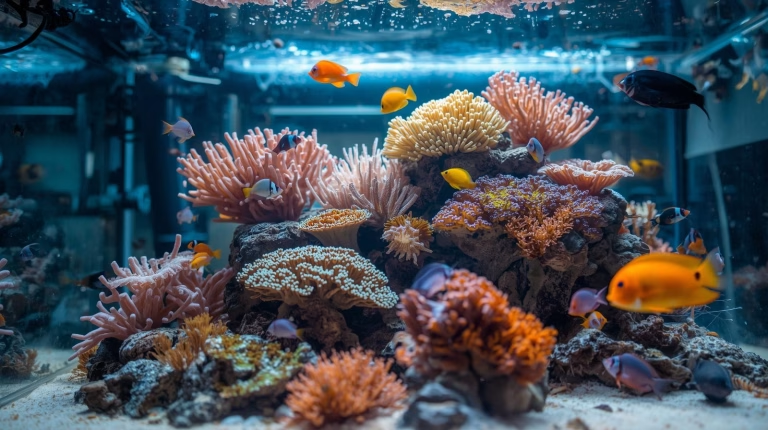
One thing you will see in the vast majority of marine aquariums is an elaborate rock structure taking up a large proportion of the real estate in the tank. This structure, often called the aquascape, may consist of archways and bridges, multiple island formations, or one large connected rock-scape with varying height levels and integrated caves.

When you see photos of people’s glorious marine aquariums full of coral, they all started with little more than rock. The rock forms the structural backbone of a reef aquarium and plays a hugely important role in making your tank function like a real mini-ecosystem.
Why Do We Call it “Live” Rock?
The reason we refer to it as “Live Rock” rather than just “rock” is not because the stone itself is actually alive. In fact, Live Rock is very much dead. It is typically made from the calcium carbonate skeletons of ancient corals that expired a very long time ago.
We actually call it Live Rock because of the organisms that exist on its surface and inside its microscopic crevices. If you were to take an up-close look at a piece of live rock straight from the ocean, you would see hundreds of small invertebrates, molluscs, sponges, and beneficial algae.
On a micro-level, you would see billions of beneficial bacteria. It is these things that make the rock “Live”. A more sensible name would be “rock with lots of living organisms inhabiting it”, but it just doesn’t have the same ring, does it?
A Bacterial Wonderland (The Nitrogen Cycle)
The rock not only provides nooks and crannies for fish to hide in, but it also provides an incredibly porous surface area for billions of bacteria to populate and reproduce.
I should clarify that, when we say bacteria, we don’t mean the bad kind that can make you very ill. We mean the very important kinds of bacteria that are imperative to the success of our aquarium.
This bacteria is your primary filtration system. When you throw food into your tank and your fish eat it, the resulting waste and rotting food creates a dissolved, highly lethal toxin known as Ammonia (NH₃).
Luckily, the bacteria living deep inside your rock consumes this ammonia and processes it into a slightly less harmful compound called Nitrite (NO₂). This Nitrite is then processed by a different type of bacteria into a much safer compound called Nitrate (NO₃) in a process known as Nitrification, the biological conversion of ammonia into nitrite and nitrate (The Nitrogen Cycle).
Skipping or rushing the nitrogen cycle is one of the biggest beginner mistakes. If you’re unsure how to do it properly, follow our complete guide to cycling a new marine aquarium.
Without the bacteria housed in your rock, ammonia would quickly accumulate and kill your fish.

When people talk about “Cycling” a new aquarium, they are referring to the weeks-long process of growing this specific bacteria on their rocks.
Real live rock helps tremendously because it is already packed with beneficial bacteria. A decent-sized chunk can significantly speed up a new tank’s cycle. The more live rock you have, the more ability your tank has to process waste.
It’s pretty simple, really. The more rock, the more surface area you are afforded for bacteria growth meaning the more ammonia you can process. On top of that, the more hiding places you have for your fish and other critters, and the more places you have to mount coral based on their need, or lack thereof, for light.
⚠️ Warning: The Hidden Dangers of Live Rock
While instant cycling sounds amazing, ocean-harvested Live Rock is a massive gamble. Along with the good bacteria, it often harbors nightmare pests:
- Aiptasia Anemones: Indestructible pests that sting your expensive corals.
- Bristle Worms & Eunice Worms: Fleshy, stinging worms that some people hate and Eunice worms which can grow massive and eat small fish.
- Mantis Shrimp: Master predators that hitchhike inside deep holes and will happily click their way through your cleanup crew and even fish if allowed to get large enough.
Once these pests are in your tank, getting them out is incredibly difficult.
So, What is Dry Rock?

Dry Rock is exactly what it sounds like. It is quarried limestone or ancient reef rock that has been removed from the water and left in the sun to completely dry out. Everything that may have once lived on the surface of the rock is completely dead.
Harvesting real ocean live rock is restricted or banned in many areas due to environmental impact which is a fantastic thing from an ecological standpoint. Dry rock and Life Rock are much more ethical sources for your aquarium.
There is no bacteria on dry rock. There are no organisms hanging out in there waiting to be plopped back into the water. Most importantly: there are no parasites, no pests, and no nuisance algae.
You can buy perfectly white aragonite dry rock (like Marco Rocks) that looks absolutely pristine and clean. Because of its safety and low cost, the vast majority of modern marine aquarium hobbyists start their aquascapes with dry rock.
💡 Note: The “Ugly Phase” is Real
The main drawback of starting with clean Dry Rock is that it takes much longer to mature. Because it lacks the rich biodiversity of ocean rock, your tank will inevitably go through a harsh “Ugly Phase” around month two or three. You will battle brown diatoms, green hair algae, and cyanobacteria before the rock finally stabilises and grows beautiful purple Coralline algae. Patience is required! Avoid the temptation to use harsh chemical products to get rid of the problem and stick to routine water changes. It will pass, I guarantee it.
How About “Life Rock”?

So we have talked about Live Rock and Dry Rock, but what is this “Life Rock” stuff you see on Amazon and at online retailers?
Life Rock is the modern middle ground. Manufactured largely by CaribSea, it is essentially dry, porous aragonite rock that has been painted shades of purple and pink to look as though it is already heavily encrusted with desirable Coralline algae. It is then coated with a film of dormant beneficial bacteria.
CaribSea claims that once submerged in your saltwater, this dormant bacteria will wake up and rapidly speed up your cycling process, helping to prevent “New Tank Syndrome”.
Life Rock is fantastic if you hate the stark white look of Dry Rock and want an instantly mature-looking tank without the risk of Live Rock pests. However, it is an incredibly expensive option and comes at a high premium for aesthetics.
The Verdict: What Should You Do?
This is the big question. If you want a tank filled with rock, what should you buy to build a budget reef? For most beginners, dry rock or the hybrid method is the safest and most cost-effective choice.
You could head out to your local fish shop and purchase a whole bunch of real ocean Live Rock. That would have you off and running in a jiffy with a fully cycled tank. But have you seen the prices?
Ranging anywhere from £15 to over £25 per kilo, filling a standard tank can quickly cost hundreds of pounds. (We wrote an entire article on Why Live Rock is So Expensive).
💰 Budget Tip: The Hybrid Method
A super popular, budget-friendly way to start a reef tank is the Hybrid Method. Buy 90% of your aquascape as cheap, white Dry Rock to save a massive amount of money and build your structure securely.
Then, buy one single, small, premium piece of real Live Rock from an established, trusted local reefer’s sump. Place it in your tank to “seed” the dry rock with good bacteria, coralline algae spores, and micro-crustaceans like copepods!
If you are ready to save some serious money and learn exactly how to transform cheap dead stone into a thriving biological filter, move on to our next guide: Live Rock On A Budget – How to Build an Affordable Rock Scape.
Frequently Asked Questions
Do I actually need rock in a marine aquarium?
It’s technically optional but most owners will need it. Unless you are running hefty external biological filtration (like massive bio-brick towers in a sump), rock is the primary surface area for the bacteria that processes toxic fish waste. Without it, your tank will likely crash due to how much you have to feed marine fish, how large they get, and how much waste they produce.
How much rock do I need for my tank?
The old hobby rule of thumb is 1 pound to 1.5 pounds of rock per gallon of water (roughly 1 kilo per 10 liters). However, with modern porous dry rock (like Marco Rock), you can often get away with slightly less, focusing more on creating a visually pleasing structure with plenty of swimming space.
How long does it take for Dry Rock to become Live Rock?
If you dose your tank with bottled bacteria (like Fritz Turbo Start or Dr. Tim’s One & Only), the dry rock will have enough bacteria to process ammonia in about 2 to 4 weeks. However, for the rock to truly mature, grow purple coralline algae, and establish a deep microfauna population, it generally takes 6 to 12 months.